How to boil plantains for perfect mangu
Introduction
Mangú is the undisputed king of the Dominican breakfast, a comforting and savory dish consisting of mashed green plantains. Achieving the perfect texture is the most critical part of this culinary ritual; it must be smooth, creamy, and slightly moist, without being watery or lumpy. Mastering the boiling technique ensures that the starch of the plantain transforms into a velvety base that can perfectly hold toppings like pickled red onions, fried cheese, or sautéed eggs.
Knowing how to boil plantains correctly matters because the quality of the mash depends entirely on the temperature of the water and the timing of the process. When done well, mangú becomes a cohesive, flavorful foundation. When done poorly, it can become gluey, gray, or unpleasantly firm. This guide provides the essential steps to ensure your plantains reach that ideal consistency every time you cook.
Choosing the right plantains

The success of your mangú begins at the market. For this specific dish, you must select green plantains. Unlike ripe plantains, which are sweet and soft, green plantains are starchy and firm, which is necessary to provide the structure required for mashing.
Look for plantains that have a vibrant green skin without any visible yellowing or black spots. The skin should feel firm to the touch. If the plantain is too ripe, it will turn into a sugary paste rather than a savory mash, ruining the traditional flavor profile of the dish.
Essential steps for boiling plantains
To achieve a professional result, follow a structured boiling process. Precision in preparation and heat management prevents common texture issues.
- Preparation and peeling: Start by cutting off both ends of the green plantains. Using a knife, make a shallow longitudinal slit along the skin from end to end. This allows you to peel the skin away easily. Once peeled, cut the plantains into medium-sized chunks (about 2 to 3 inches). Cutting them into smaller pieces ensures they cook evenly and faster.
- Boiling the water: Place the plantain chunks in a pot and cover them with enough water so that they are submerged by at least an inch. Do not add salt to the water at the beginning, as salted water can sometimes affect the starch absorption; it is better to season the mash later.
- Cook time and monitoring: Bring the water to a boil, then reduce the heat to medium. Without a lid, the plantains will cook more evenly. The cooking time typically ranges from 15 to 25 minutes. You will know they are ready when a fork pierces the center of a chunk with zero resistance.
- Draining: Once tender, carefully drain the hot water. It is vital to remove almost all the liquid to prevent a soggy mash, though you may want to reserve a small amount of the cooking water to adjust the consistency during the mashing phase.
Achieving the perfect mash consistency

The true secret to authentic mangú lies in the mashing technique. This is where the "perfect" texture is finalized.
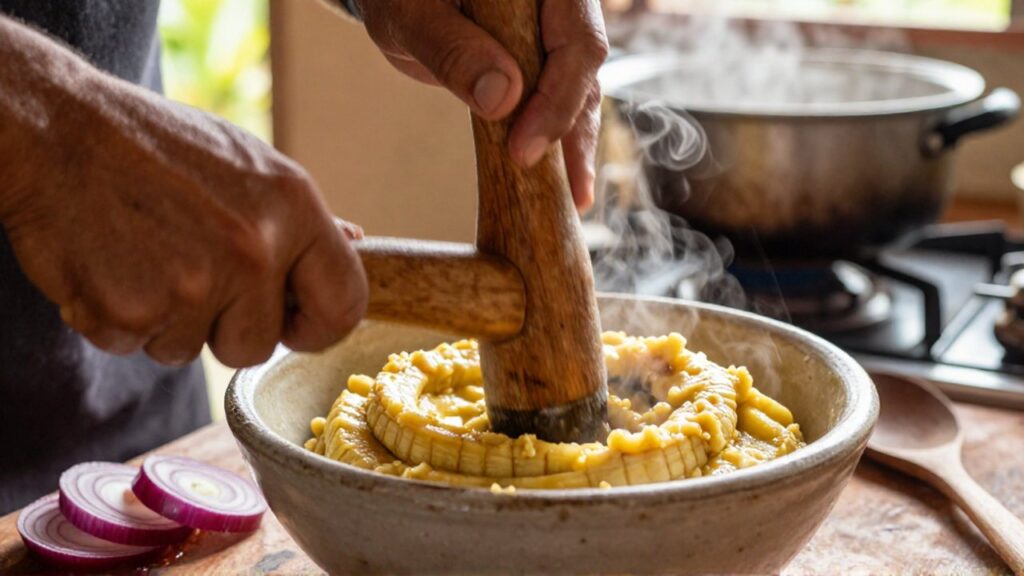
While the plantains are still steaming hot, begin mashing them in a bowl or back in the pot. Use a heavy masher or a large fork. As you mash, slowly incorporate a small amount of butter or olive oil and a splash of the reserved cooking water or warm milk. This step is what transforms the starch into a creamy, silk-like consistency.
| Desired Texture | Method Adjustment |
|---|---|
| Creamy/Smooth | Add more butter/oil and a bit of warm liquid while mashing vigorously. |
| Firm/Structured | Drain the water thoroughly and use less liquid during the mashing process. |
| Lumpy | Ensure plantains are boiled until very soft and mash more continuously. |
Common mistakes to avoid
Even experienced cooks can run into trouble if they overlook certain details. Avoiding these pitfalls will save your meal:
- Using ripe plantains: As mentioned, sweetness is the enemy of traditional mangú. Always use green, starchy fruit.
- Undercooking the fruit: If the plantains are even slightly firm in the center, the mash will be grainy and difficult to smooth out.
- Adding too much water: If you add too much liquid during the mashing stage, the dish will lose its body and become a soup-like consistency rather than a mash.
- Mashing cold plantains: You must mash the plantains immediately after draining. Once they cool down, the starch sets and becomes much harder to work with, often resulting in a heavy, gummy texture.
Frequently asked questions
Can I use a pressure cooker to boil plantains? Yes, you can use a pressure cooker to save time. However, you must monitor the timing closely, as plantains can overcook very quickly under pressure, leading to a mushy texture.
Why is my mangú gray instead of white? A grayish tint often occurs if the plantains are left in the water for too long after they are cooked or if they are exposed to too much air before mashing. Aim to drain and mash them immediately.
Should I add salt to the boiling water? While some people do, it is generally more effective to season the plantains during the mashing stage. This allows you to control the salt levels more precisely and ensures even distribution throughout the mash.
How can I make mangú extra creamy? For an extra indulgent texture, use a combination of high-quality butter and a small amount of warm milk or even a touch of cream during the mashing process.
Leave a Reply