
How to achieve a perfect sauté for Dominican sofrito

Introduction
In Dominican cuisine, the foundation of almost every savory dish, from locrio to sancocho, is the sofrito. This aromatic base, composed of finely chopped vegetables and herbs, provides the essential flavor profile that defines the island's culinary identity. Achieving a perfect sauté for this mixture is not merely about cooking vegetables; it is about the careful extraction of oils, flavors, and aromas to create a concentrated essence that elevates the entire meal.
A successful sauté happens at the very beginning of the cooking process, acting as the building block for stews, rice dishes, and meats. When done correctly, the vegetables soften and release their natural sugars without burning, creating a fragrant, slightly translucent base. Mastering this technique ensures that your dishes possess depth and complexity rather than tasting like individual, disconnected ingredients. This guide focuses on the precise temperature control and timing required to transform raw aromatics into a professional-grade sofrito.
The essential ingredients for a traditional base
Before applying heat, one must understand the composition of a Dominican-style sofrito. While variations exist depending on the household, the core elements generally include garlic, onions, bell peppers (often green), and ajíes gustosos. The ají gustoso is a crucial component, offering a unique, mild pepper flavor that is central to the Dominican palate.
To achieve a professional result, the preparation of these ingredients is just as important as the sauté itself. All vegetables should be minced or finely diced to a relatively uniform size. Uniformity ensures that every piece cooks at the same rate, preventing a situation where some bits are mushy while others remain crunchy. Once the prep is complete, the ingredients are ready to meet the fat and the heat.
Choosing the right fat and pan
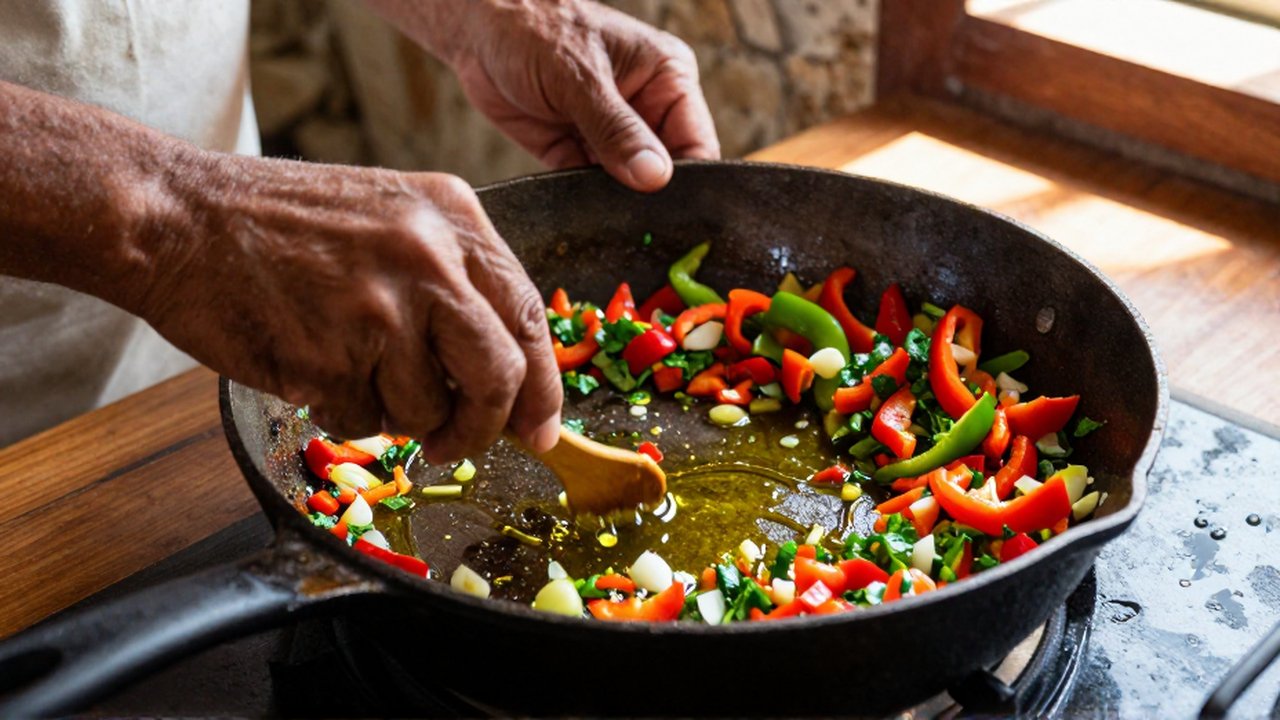
The medium through which you sauté determines how heat is distributed and how much flavor is imparted. For Dominican cooking, vegetable oil or olive oil are the most common choices. The oil serves two purposes: it conducts heat evenly to the vegetables and carries the fat-soluble flavors of the aromatics throughout the dish.
Using a heavy-bottomed pan, such as a cast iron skillet or a stainless steel pot, is highly recommended. Heavy pans have better heat retention, which prevents sudden temperature drops when you add the cold vegetables to the hot oil. A thin pan may lead to "hot spots," causing the garlic to burn before the onions have softened, which results in a bitter taste that can ruin the entire base.
Step by step technique for a perfect sauté
The process of sautéing sofrito requires patience and constant attention. Follow these logical steps to ensure a consistent result:
- Heat the oil: Start with a medium heat. You want the oil to be shimmering and hot, but not smoking. If the oil smokes, the temperature is too high, and you risk scorching the delicate aromatics immediately.
- Introduce the aromatics in stages: Not all ingredients cook at the same speed. Start with the onions and bell peppers. These take longer to soften and release their moisture.
- Add the garlic last: Garlic is highly sensitive to heat and can burn in seconds. Once the onions are translucent and have begun to soften, add the minced garlic. This ensures the garlic perfumes the oil without turning bitter.
- Maintain constant motion: Use a wooden spoon or a spatula to move the vegetables frequently. Sautéing is a dynamic process; stirring prevents sticking and ensures even color distribution.
- Watch for the fragrance: You will know the sauté is approaching completion when the raw smell of the onion disappears and is replaced by a sweet, savory aroma that fills the kitchen.
Common mistakes to avoid
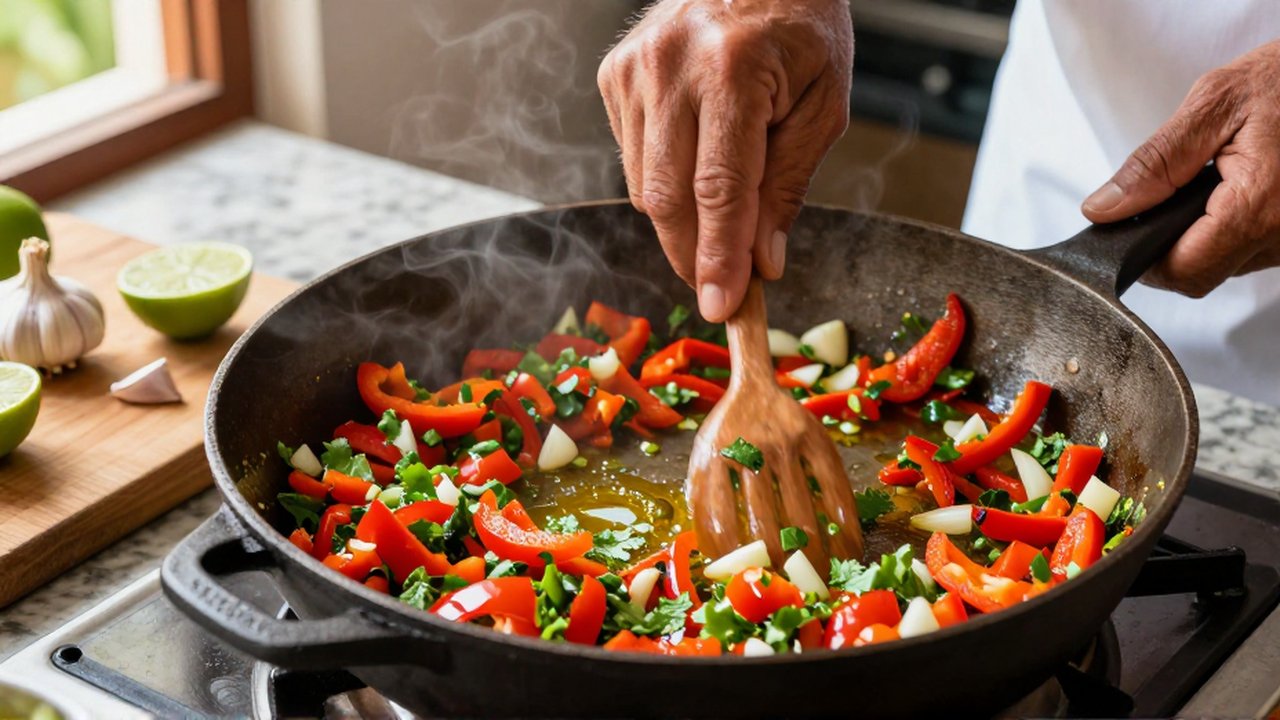
The most frequent error in preparing a sofrito is using heat that is too high. In the rush to cook quickly, many home cooks burn the garlic. Once garlic turns dark brown or black, it loses its sweetness and introduces a harsh, acrid flavor that is difficult to mask in the final dish.
Another common mistake is overcrowding the pan. If you add too much sofrito at once, the temperature of the oil will drop sharply. Instead of sautéing (cooking in fat), the vegetables will begin to steam in their own released juices. While this makes them soft, it prevents the caramelization and flavor concentration that a true sauté provides. If making a large batch, it is better to sauté in smaller increments.
Summary of sautéing parameters
| Variable | Ideal State | Consequence of Error |
|---|---|---|
| Heat Level | Medium | High heat causes burning; low heat causes sogginess. |
| Ingredient Order | Onion/Pepper $rightarrow$ Garlic | Adding garlic too early leads to bitterness. |
| Pan Type | Heavy-bottomed | Thin pans create uneven cooking and hot spots. |
| Movement | Constant stirring | Neglect leads to sticking and uneven browning. |
Frequently asked questions
Can I use butter instead of oil for sofrito? While butter adds richness, it has a lower smoke point than oil. If using butter, keep the heat lower to prevent the milk solids from burning. Many prefer using a combination of oil and a small amount of butter for flavor.
How do I know when the sofrito is finished? The sofrito is ready when the vegetables are soft, the onions are translucent, and the mixture smells deeply aromatic. There should be no "sharp" or raw smell from the onions or garlic.
Is it better to use a blender for sofrito? While many modern kitchens use blended sofrito for convenience, a hand-sautéed version offers superior texture and flavor control. Blended mixtures can sometimes release too much water, making it harder to achieve a concentrated sauté.
Can I prepare the sofrito in advance? Yes, you can sauté a large batch of sofrito, let it cool, and store it in the refrigerator. However, for the best flavor in a specific dish, sautéing fresh ingredients is always recommended.
Leave a Reply