
Traditional methods for roasting whole pigs on spit

Introduction
Roasting a whole pig on a spit, often referred to as lechón asado, is a cornerstone of celebratory culinary traditions in many Caribbean and Latin American cultures. This method involves slow-cooking an entire pig over an open flame or hot coals using a rotating metal rod. It is the ultimate centerpiece for large gatherings, weddings, and community festivals, providing enough sustenance for dozens of guests while creating a unique flavor profile that cannot be replicated in a standard oven.
The process is as much an art form as it is a cooking technique. It requires patience, precise temperature management, and a deep understanding of how heat interacts with fat and skin. When executed correctly, the meat becomes incredibly tender and succulent, while the skin transforms into a crisp, salty delicacy known as cuerito. Mastering this technique allows cooks to honor cultural heritage and provide a memorable dining experience that celebrates communal eating.
Essential equipment for spit roasting

To begin the traditional roasting process, specific hardware is required to ensure the pig rotates evenly and stays securely positioned. The most critical component is the spit (the long metal rod) and the rotisserie mechanism, which can be manually turned or powered by a small motor. A sturdy frame is necessary to hold the weight of the animal, which significantly increases once the juices begin to render.
In addition to the spit, several other tools are indispensable:
- Princes/Spit forks: Large metal spikes that pierce the meat to keep the pig from sliding along the rod.
- Drip pan: Positioned underneath the pig to catch falling fats and juices, preventing flare-ups and collecting liquid that can be used for basting.
- Meat thermometer: To monitor the internal temperature of the thickest part of the meat (usually the shoulder or ham).
- Basting brush: Used to apply marinades or juices during the long cooking process.
Preparation and seasoning techniques
Preparation starts long before the fire is lit. The pig must be thoroughly cleaned and prepared to ensure the skin can achieve the desired crispness. One of the most vital steps is drying the skin. Any moisture left on the surface will cause the skin to steam rather than crisp, resulting in a rubbery texture. Many traditional cooks use salt or even a light coating of vinegar to help draw out moisture.
The seasoning, or marinade, is typically applied to the interior cavity of the pig to infuse the meat with flavor. Traditional Caribbean flavors often rely on a blend of citrus juices (such as bitter orange), garlic, oregano, salt, and black pepper. This mixture is rubbed deep into the muscle tissue. While the interior is heavily seasoned, the exterior skin is often kept relatively simple, treated primarily with salt to facilitate the roasting of the cuerito.
Heat management and roasting process
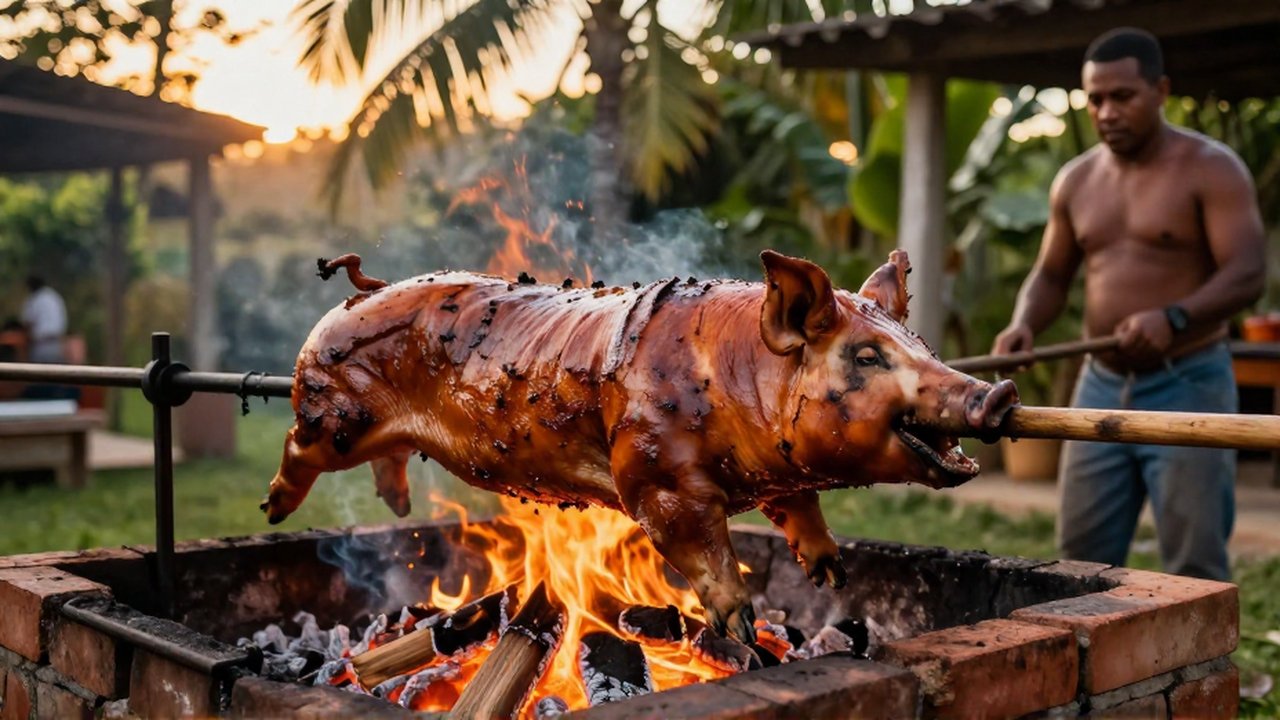
The secret to a successful spit roast lies in the control of the heat source, which typically consists of hardwood charcoal or seasoned wood logs. The goal is a slow, steady roast rather than a high-heat sear. If the heat is too intense, the exterior will burn before the internal temperature reaches a safe and tender level.
The roasting process generally follows these stages: 1. Initial Setting: The pig is placed over a moderate heat source to begin the warming process. 2. Slow Rotation: The spit must turn at a consistent, slow speed. This ensures that the rendered fat flows over the meat, self-basting it continuously. 3. Monitoring Fat Render: As the cooking progresses, the fat under the skin will melt. This "basting" effect is what keeps the meat moist. 4. The Crisping Phase: In the final hour of cooking, the heat may be slightly increased or the pig moved closer to the coals to ensure the skin reaches maximum crunch.
Common mistakes to avoid
Even experienced cooks can encounter difficulties when roasting a whole pig. One frequent mistake is inconsistent rotation. If the spit does not turn at a steady pace, one side of the pig will be overcooked while the other remains raw and cold. Another error is under-seasoning the cavity. Because the meat is so dense, flavors applied only to the surface will not penetrate the center effectively.
Furthermore, many people struggle with flare-ups. If the drip pan is not managed correctly, excess fat can drip directly into the coals, causing sudden bursts of flame that can char the skin unevenly. Finally, rushing the process is a common pitfall. A whole pig requires several hours of slow cooking; attempting to speed up the process by increasing the heat will almost always result in meat that is tough and difficult to eat.
Frequently asked questions
How long does it take to roast a whole pig? The duration depends heavily on the weight of the pig and the temperature of the coals. Generally, it can take anywhere from four to eight hours to ensure the meat is fully cooked and tender.
How do I know when the pig is finished? The most reliable method is using a meat thermometer. The internal temperature should reach a safe level for pork, usually around 145°F (63°C) for medium, though many prefer it slightly higher for the meat to become "fall-off-the-bone" tender.
Can I use different types of wood for the fire? Yes, but it is best to use hardwoods. Hardwoods provide a more consistent, long-lasting heat compared to softwoods, which may burn too quickly or produce excess soot and resin.
How should I store leftovers? Leftover roasted pork should be stored in an airtight container in the refrigerator. To regain the crispness of the skin, it is best to reheat the meat in an oven rather than a microwave.
Leave a Reply