A guide to roasting root vegetables in the oven
Introduction
Roasting root vegetables is one of the most effective ways to transform humble, earth-grown ingredients into culinary delights. By applying dry heat in an oven, you trigger the Maillard reaction and caramelization, which converts complex starches into natural sugars. This process creates a beautiful contrast between a crispy, golden exterior and a tender, creamy interior. Whether you are preparing a side dish for a festive meal or a simple weekday dinner, mastering this technique ensures deep flavor and satisfying textures.
This method is particularly useful because root vegetables are incredibly versatile and nutrient-dense. Vegetables like sweet potatoes, carrots, beets, and cassava can be prepared with minimal intervention, making them ideal for efficient cooking. Understanding the variables of temperature, timing, and seasoning allows you to achieve consistent results every time you step into the kitchen.
Essential root vegetables for roasting

Selecting the right vegetables is the first step toward a successful roast. Root vegetables vary in density, moisture content, and sugar levels, which directly influences how they react to heat. In many tropical and Caribbean contexts, vegetables like yams, cassava (yuca), and sweet potatoes are staples that thrive in the oven.
Common options include:
- Sweet Potatoes and Yams: These have high starch and sugar content, leading to intense caramelization.
- Carrots and Parsnips: These offer a balance of sweetness and earthy undertones.
- Beets: These require a bit more time due to their density but provide a rich, deep flavor.
- Potatoes: Classic varieties offer a reliable texture, ranging from fluffy to crispy depending on the starch content.
When selecting your produce, always look for firmness. Avoid vegetables that feel soft or show signs of shriveling, as excess moisture can lead to steaming rather than roasting.
Preparation steps for perfect results
To achieve a professional finish, the way you prepare the vegetables is just as important as the cooking time. Follow these fundamental steps:
Uniform cutting The most common mistake is cutting vegetables into uneven pieces. If some chunks are large and others are small, the small pieces will burn before the large ones are cooked through. Aim for uniform cubes, wedges, or rounds. For denser vegetables like cassava, ensure the pieces are small enough for the heat to penetrate the core efficiently.
Drying the surface Moisture is the enemy of crispiness. After washing and cutting your vegetables, pat them thoroughly dry with a clean kitchen towel. If the surface is wet, the oven's energy will be spent evaporating water instead of browning the vegetable, resulting in a mushy texture.
Seasoning and oil coating Place your cut vegetables in a large bowl rather than directly on the baking sheet. Add a high-quality oil with a high smoke point, such as avocado oil or vegetable oil, and toss them thoroughly. The goal is a thin, even sheen on every surface. Add salt, pepper, and any desired herbs or spices at this stage to ensure even distribution.
Oven temperature and cooking techniques

The balance between heat and time defines the texture of your roast. Generally, a temperature between 375°F and 425°F (190°C to 220°C) is ideal for root vegetables.
Higher temperatures promote rapid browning and a crispier skin. This is excellent for carrots or potatoes. Lower temperatures allow denser vegetables, like large chunks of yam, to cook through to the center without the outside becoming overly charred.
The importance of spacing Never crowd your baking sheet. When vegetables are packed too closely together, they release steam that gets trapped between them. This creates a "steaming" effect, leaving your vegetables soft and pale. For the best results, spread them out in a single layer with plenty of space between each piece. This allows the hot air to circulate freely around every surface.
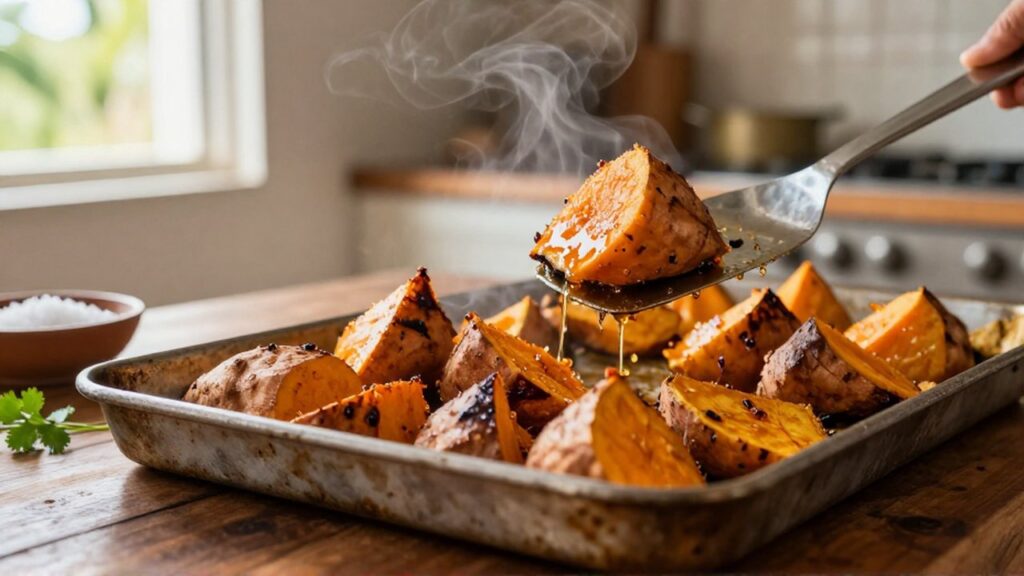
The flipping method Halfway through the cooking process, use a spatula to turn the vegetables. This ensures that all sides are exposed to the heat of the pan and the hot air of the oven, preventing one side from becoming soggy while the other burns.
Common mistakes to avoid
Even experienced cooks can run into issues when roasting. Recognizing these pitfalls will help you troubleshoot your technique.
| Mistake | Result | Solution |
|---|---|---|
| Crowding the pan | Steamed, mushy vegetables | Use two pans or cook in batches |
| Uneven cutting | Mixed textures (burnt and raw) | Use a knife to ensure uniform sizes |
| Using too much oil | Greasy, heavy texture | Use just enough to coat, not drench |
| Low oven temperature | Lack of browning/caramelization | Ensure the oven is fully preheated |
Frequently asked questions
How do I know when the vegetables are finished? The best indicator is a combination of visual and textural cues. The vegetables should have golden-brown edges and a slight char in some spots. If you pierce them with a fork, it should slide in easily with no resistance.
Can I roast different vegetables on the same tray? Yes, but only if they have similar cooking times. If you are roasting carrots and large chunks of cassava together, you may need to add the carrots later so they do not overcook while the cassava softens.
Should I peel the vegetables before roasting? This depends on the vegetable and your preference. For carrots and beets, the skin can be left on for extra texture and nutrients. For potatoes, leaving the skin on helps create a crispier exterior. For very dense tubers like cassava, peeling is usually recommended for a better mouthfeel.
Can I use butter instead of oil? While butter adds great flavor, it has a lower smoke point than many oils, meaning it burns more easily at high roasting temperatures. If you want the flavor of butter, toss the vegetables in oil first and add a small amount of melted butter during the last few minutes of cooking.
Leave a Reply