
Best sides to serve with Dominican breakfast Mangú
Introduction
Mangú is the undisputed king of the Dominican breakfast table. This comforting dish, made from mashed boiled green plantains seasoned with butter and a touch of salt, serves as the creamy, starchy foundation for a morning meal that provides lasting energy. Because of its dense and smooth texture, Mangú requires complementary flavors and textures to create a balanced dining experience.
Serving the right sides is essential to transforming a simple bowl of mashed plantains into a complete, traditional feast. The goal is to balance the mild, earthy taste of the plantain with proteins, fats, and acidity. Whether you are preparing a quick weekday breakfast or a lavish weekend brunch, the combination of ingredients you choose defines the cultural authenticity and satisfaction of the meal.
Choosing the right accompaniments allows you to play with different culinary profiles. You can lean into the savory richness of fried meats, the salty punch of cured proteins, or the freshness of tropical vegetables. This guide explores the best combinations to elevate your Mangú and ensure a breakfast that feels truly Dominican.
Essential protein pairings for Mangú

The most traditional way to eat Mangú is to pair it with a significant protein source. Since plantains are heavy in carbohydrates, a protein helps provide satiety and nutritional balance. In Dominican culture, the protein is often the star of the plate, providing a salty or savory contrast to the creamy mash.
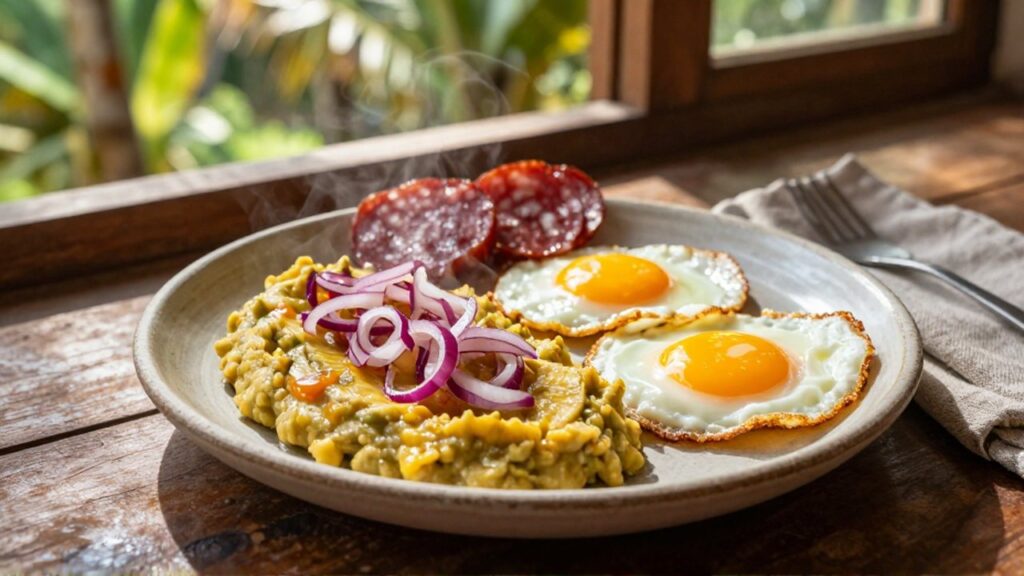
Fried Eggs are perhaps the most common and versatile pairing. A sunny-side-up egg is highly recommended because the runny yolk acts as a natural sauce that blends into the Mangú, adding richness and moisture. This creates a velvety mouthfeel that makes every bite more flavorful.
Fried Cheese is a staple in any traditional Dominican breakfast. Using a firm, salty white cheese that holds its shape when fried provides a crucial textural contrast. The crispy exterior of the cheese against the soft plantains creates a delightful sensory experience.
Salami and Sausage options are also widely enjoyed. Dominican salami, often sautéed with onions, offers a savory, salty kick that cuts through the starchiness of the plantain. For those looking for something even heartier, fried liver or various types of sausage can provide a deep, umami-rich component to the meal.
Traditional tomato and onion topping
You cannot discuss a proper Mangú without mentioning Los Cebollas (the onions). This is not just a side dish but a mandatory condiment that defines the experience. To prepare this traditionally, red onions are sliced thinly and pickled in a mixture of vinegar, water, salt, and sometimes a touch of oil or oregano.
The acidity of the pickled onions is functional rather than just flavorful. It serves to "cut" through the heaviness of the mashed plantains and the fats from the butter or fried meats. The bright, sharp tang of the vinegar cleanses the palate between bites, preventing the meal from feeling overly heavy or greasy.
For a more robust version, these onions can be sautéed in olive oil until they are soft and translucent, though the pickled version remains the most iconic accompaniment for a classic breakfast experience.
Complementary textures and vegetables

While proteins and onions are the pillars, adding different textures can enhance the overall meal. Since Mangú is very soft, incorporating something crunchy or fresh helps improve the eating experience.
| Component | Texture | Role in the Meal |
|---|---|---|
| Avocado | Creamy/Buttery | Adds healthy fats and a mild, fresh flavor |
| Fried Plantains (Tostones) | Crunchy/Crispy | Adds a different plantain profile and structural variety |
| Fresh Fruit | Juicy/Light | Provides sweetness and cleanses the palate |
Avocado is a frequent addition to the plate. Its natural creaminess complements the Mangú, while its freshness provides a cooling effect against salty meats. Tostones (fried green plantain slices) can also be served alongside, offering a crispy texture that contrasts the smooth mash of the Mangú.
Common mistakes when serving Mangú
To ensure the best experience, avoid certain common mistakes that can unbalance the meal. One frequent error is neglecting the seasoning of the plantains themselves. If the Mangú is under-salted or lacks enough fat (butter or oil), it will taste bland regardless of how good the sides are.
Another mistake is serving the sides at incorrect temperatures. Mangú should be served warm and fresh. If the protein or the onions are cold, the meal loses its comforting appeal. Furthermore, avoid over-salting the sides. Since many traditional accompaniments like salami and fried cheese are naturally quite salty, you should season your Mangú carefully so the entire plate does not become overwhelming.
Frequently asked questions
Can I use ripe plantains for Mangú? No, traditional Mangú must be made with green (unripe) plantains. Ripe plantains are too sweet and have a different texture that does not mash into the desired consistency required for this dish.
What is the best vinegar for the pickled onions? A simple white vinegar or apple cider vinegar works best. The goal is a clean, sharp acidity that complements the onions without overpowering the other flavors on the plate.
Is Mangú suitable for a vegan diet? Mangú itself can be made vegan by using plant-based butter or olive oil instead of dairy butter. To keep the meal vegan, pair it with avocado and seasoned vegetables instead of eggs, cheese, or meat.
Leave a Reply