Electro-traditional Dominican breakfast recipes with fried plantains
Introduction
Dominican breakfast culture is a vibrant tapestry of flavors, textures, and deep-rooted traditions. At the heart of this culinary identity lies the plantain, a versatile staple that serves as the foundation for most morning meals. Whether served as sweet ripe plantains or savory green ones, they provide the necessary energy and comfort to start the day. For many, a Dominican breakfast is not just a meal; it is a cultural ritual that brings people together through shared tastes and techniques.
Understanding how to prepare these dishes allows you to recreate a piece of Caribbean heritage in your own kitchen. This guide focuses on the "electro-traditional" approach—blending time-honored cooking methods with modern kitchen efficiencies to deliver authentic results. By mastering the art of the fried plantain, you can elevate simple ingredients into a hearty, satisfying breakfast that honors Dominican roots while fitting into a contemporary lifestyle.
The importance of plantain types in Dominican cooking

In Dominican cuisine, the distinction between ripe and green plantains is crucial. Choosing the wrong variety can completely change the profile of your breakfast. Ripe plantains, known as maduros, are characterized by their sweetness and soft texture once fried. They are typically used to balance salty components like cheese or eggs. Green plantains, or tostones, are starchy and firm, requiring a double-frying process to achieve their signature crunch.
Successful preparation starts with selecting the right fruit. A ripe plantain should have a yellow skin with some black spots, indicating high sugar content. A green plantain should be firm and bright green, providing the structural integrity needed for frying. Mastering these two variations allows you to alternate between sweet and savory breakfast combinations effectively.
Traditional recipes featuring fried plantains
There are several quintessential ways to serve plantains during a Dominican morning. Each recipe offers a different nutritional balance and flavor intensity.
Mangú with Fried Plantains While Mangú is traditionally a mashed dish made from boiled green plantains, it is frequently served alongside crispy fried plantains in modern "electro-traditional" breakfasts to add texture variety.
- Core components: Mashed green plantains, pickled red onions, and sautéed eggs.
- Serving suggestion: Use the creamy texture of the mash to contrast with the crunch of the fried side pieces.
Maduros and Cheese This is a quick, high-energy breakfast that relies on the natural sweetness of the fruit.
- Core components: Sliced ripe plantains fried until caramelized, served with slices of fresh white cheese (such as Queso de Freír).
- Preparation tip: Ensure the oil is at the correct temperature so the sugar in the ripe plantain does not burn before the interior softens.
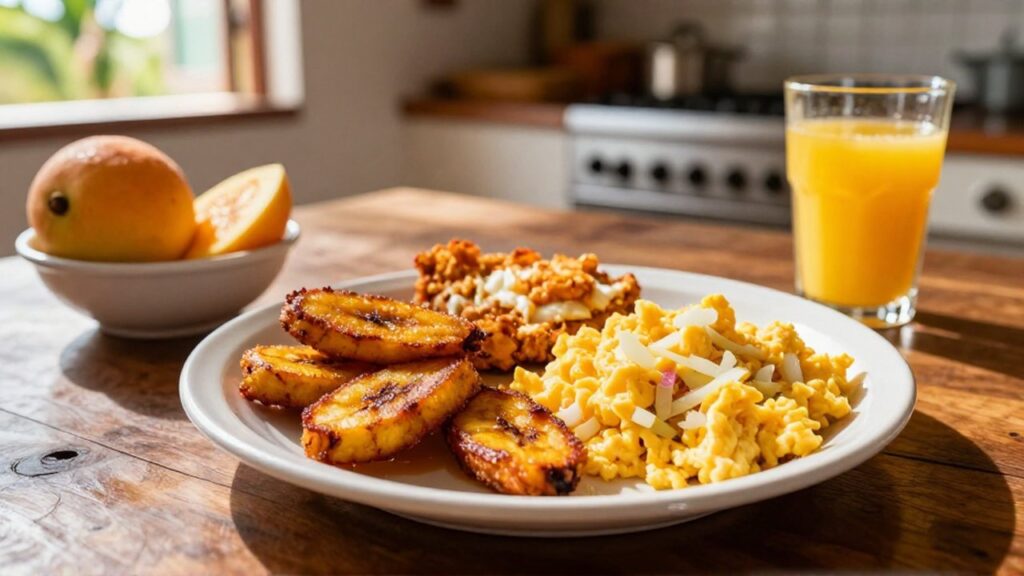
The Complete Dominican Breakfast Plate For those seeking a heavy, traditional meal, a combination plate is the standard.
- Core components: Fried plantain slices, scrambled eggs with sautéed onions and tomatoes, fried cheese, and sometimes fried salami or beans.
- Benefit: This combination provides a full spectrum of macronutrients, including carbohydrates, proteins, and fats.
Essential techniques for perfect fried plantains
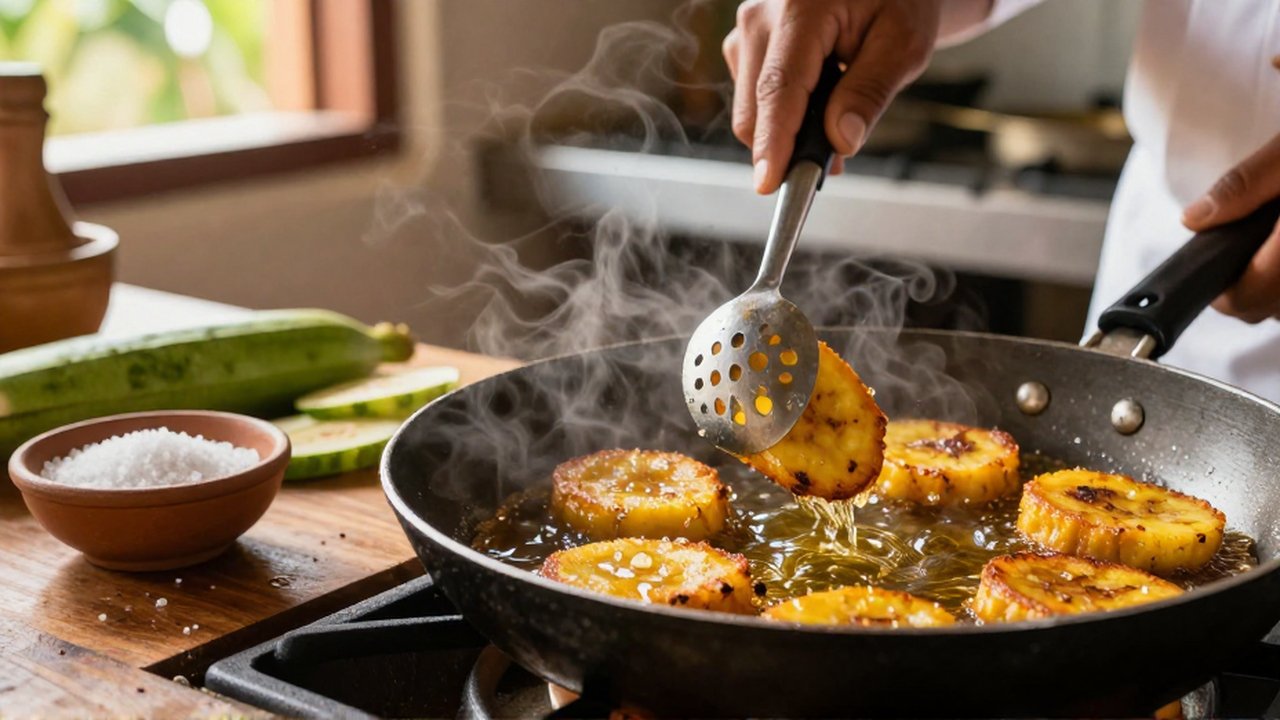
Achieving the ideal texture—crispy on the outside and tender on the inside—requires specific attention to heat management and fruit preparation.
| Technique | Best For | Result |
|---|---|---|
| Single Frying | Ripe Plantains (Maduros) | Caramelized, soft, and sweet. |
| Double Frying | Green Plantains (Tostones) | Extra crunchy and savory. |
| Slicing Thickness | All varieties | Thin slices increase crunch; thick slices increase softness. |
To make perfect tostones, you must first fry the green plantain slices until they are cooked but not browned. Remove them, flatten them using a press or the bottom of a heavy glass, and then fry them a second time at a higher temperature. This second fry is what creates the golden, crispy crust. For maduros, lower heat is often preferable to allow the natural sugars to caramelize slowly without turning the exterior bitter.
Common mistakes to avoid when frying plantains
Many home cooks struggle with plantains due to temperature fluctuations or improper fruit selection. One frequent error is overcrowding the pan. When too many slices are added to the oil at once, the temperature drops rapidly, causing the plantains to absorb excess oil and become greasy rather than crispy.
Another mistake is using plantains that are either too hard (underripe green) or too mushy (overripe yellow). If a green plantain is not sufficiently ripe, it will remain unpleasantly starchy and tough even after double frying. Conversely, if a ripe plantain is too soft, it will fall apart in the oil. Always aim for a balance of firmness and sugar development.
Frequently asked questions
Can I use an air fryer for these recipes? Yes, you can achieve a healthier version of fried plantains using an air fryer. Brush the slices lightly with oil to ensure they don't dry out, and cook them at a high temperature to mimic the traditional frying method.
How do I store leftover fried plantains? Store them in an airtight container in the refrigerator. To restore their texture, avoid the microwave, as it makes them soggy; instead, reheat them in a pan or a toaster oven to regain the crispness.
What is the best oil for frying plantains? High-smoke point oils, such as vegetable, canola, or peanut oil, are best. These allow you to maintain the necessary heat for frying without the oil breaking down or smoking excessively.
Why are my plantains absorbing too much oil? This usually happens because the oil temperature is too low. If the oil isn't hot enough, the plantain will sit in the fat and soak it up rather than forming a quick, crispy seal on the surface.
Leave a Reply