
Steps to steam rice and beans using traditional methods
Introduction
Steaming rice and beans is a fundamental culinary practice in Dominican households, serving as the foundation for many daily meals. Unlike boiling, which can lead to waterlogged grains or mushy legumes, steaming uses controlled moisture and heat to ensure each grain of rice remains distinct and every bean maintains a creamy yet firm texture. This method is essential for achieving the perfect balance of flavor and structure, making it the preferred technique for those seeking authentic results.
Mastering this method is appropriate for anyone looking to elevate their home cooking from simple sustenance to a culturally rich experience. By utilizing traditional steaming principles, you preserve the nutritional integrity of the ingredients and enhance the natural aromas of the seasonings. Whether you are preparing a quick weekday lunch or a festive family dinner, understanding how to manage heat and moisture is the key to success.
Importance of the steaming technique
The traditional approach to preparing rice and beans relies on the interaction between steam and heat. In many Caribbean kitchens, the goal is to achieve "graneado"—a term used to describe rice that is fluffy, separate, and never sticky. Steaming allows the heat to penetrate the center of the grain without overcooking the exterior. This precision prevents the common mistake of ending up with a pot of porridge-like rice.
For the beans, steaming ensures that the skins do not burst prematurely. When beans are cooked properly using a combination of simmering and subsequent steaming, they develop a velvety interior while providing a clean bite. This dual-process method is what separates professional-grade traditional cooking from amateur attempts.
Essential tools and preparation
To replicate traditional methods, you do not necessarily need specialized industrial equipment, but you must have the right vessels. A heavy-bottomed pot is vital because it distributes heat evenly, preventing the bottom layer of rice from burning before the steam reaches the top.
Preparation begins with the quality of the ingredients. Always rinse your rice under cold water several times to remove excess surface starch; this is the most critical step in preventing stickiness. For the beans, a thorough soaking period is recommended to reduce cooking time and ensure even texture.
| Ingredient/Tool | Role in Steaming |
|---|---|
| Heavy-bottomed pot | Ensures even heat distribution and prevents burning. |
| Rinsed long-grain rice | Provides the structural base for the dish. |
| Soaked legumes | Ensures even cooking and better digestibility. |
| Aromatics (Garlic, Onion, Peppers) | Infuses the steam with flavor. |
Step by step steaming process

The process is generally divided into two stages: the initial simmering of the liquid and the final steaming phase. While rice and beans can be cooked together in some variations, the most reliable traditional method involves preparing the beans first and then using their flavorful liquid to cook the rice.
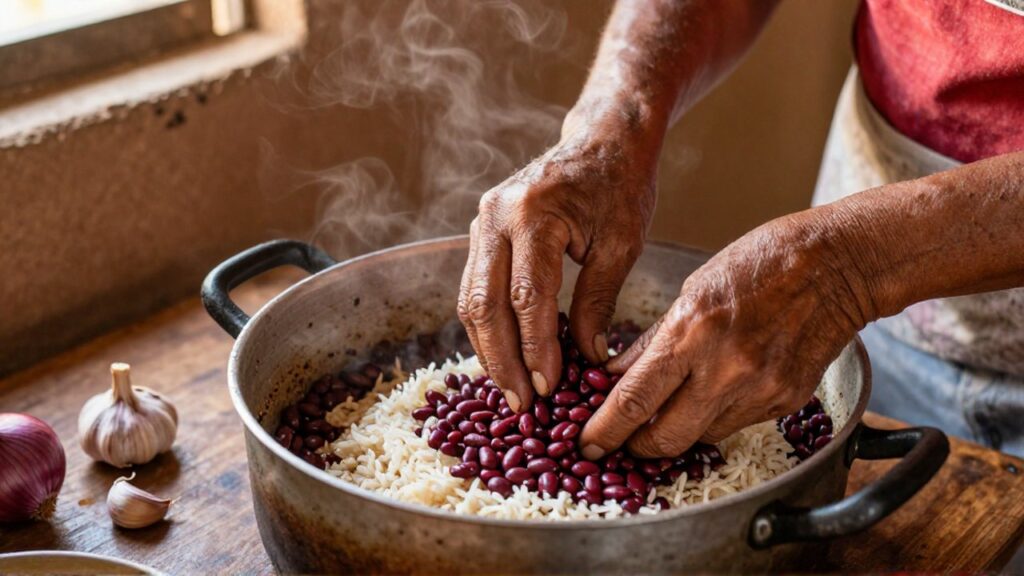
Preparing the beans Start by simmering your soaked beans in water with aromatics such as garlic, onions, and bell peppers. Once the beans are tender but not falling apart, strain the beans and set them aside. Keep the liquid (the bean broth), as this contains the essence of the flavor.
Starting the rice In a clean heavy pot, sauté your aromatics in a small amount of oil. Add the rinsed rice and toast it slightly to coat each grain. Add the bean broth using a specific ratio, typically two parts liquid to one part rice. Bring this mixture to a boil over medium-high heat.
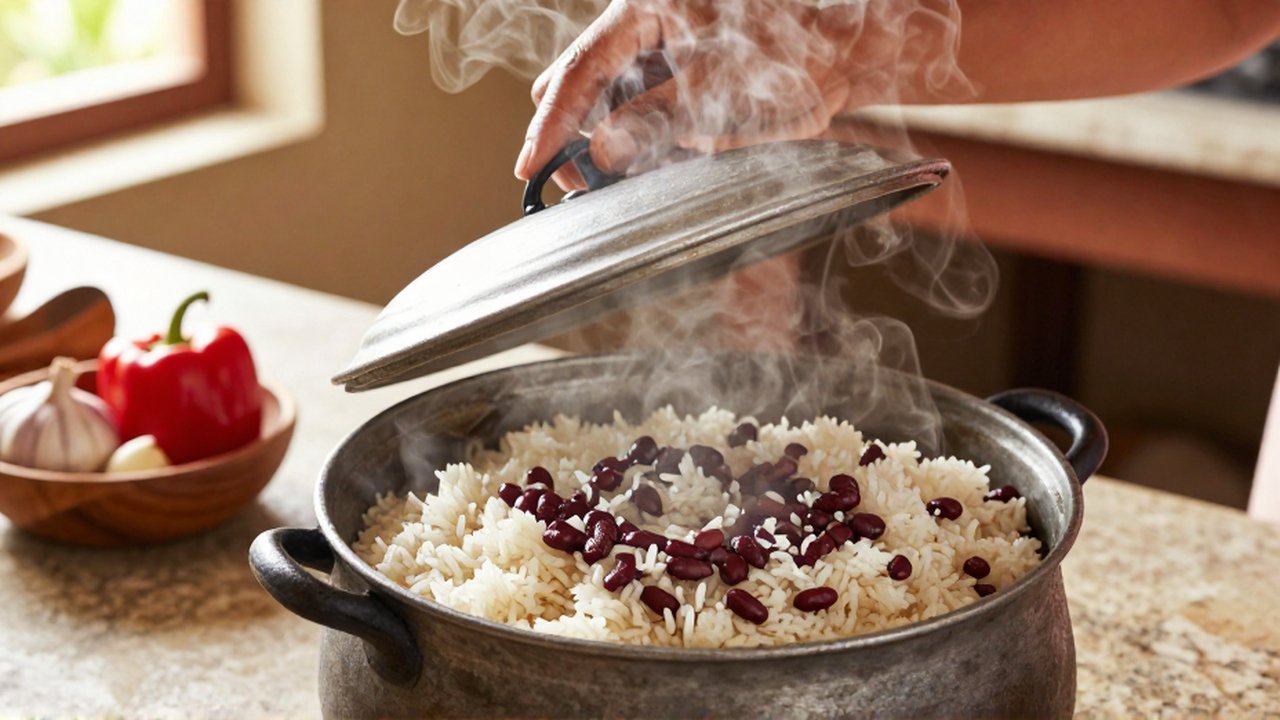
The steaming phase Once the liquid has been mostly absorbed by the rice and you see small "craters" or holes forming on the surface, reduce the heat to the lowest possible setting. Cover the pot with a tight-fitting lid. If your lid is not perfectly airtight, you can place a clean kitchen towel between the pot and the lid to trap the steam.
The final rest Allow the rice to steam undisturbed for approximately 15 to 20 minutes. Once the time is up, turn off the heat and let the pot sit, covered, for another five minutes. This final resting period allows the moisture to redistribute, ensuring the grains are light and airy.
Common mistakes to avoid
One of the most frequent errors is stirring the rice during the steaming phase. Once the lid is closed and the heat is lowered, the rice must remain untouched. Stirring introduces cool air and disrupts the even distribution of steam, which can lead to unevenly cooked grains.
Another mistake is using too much water or failing to use a tight lid. If steam escapes constantly, the rice will remain hard in the center while the bottom burns. Always ensure your heat is at the minimum setting during the final stage to avoid scorching the base of the pot.
Frequently asked questions
Can I use a rice cooker for traditional steaming? While rice cookers are convenient, they often follow a programmed water-to-rice ratio that may not account for the thickness of bean broth. For the most authentic texture, the stovetop method provides better control over the "graneado" effect.
Why is my rice always sticky? Stickiness is usually caused by two things: not rinsing the rice sufficiently to remove starch, or using too much water. Ensure you rinse until the water runs clear and adhere strictly to your liquid ratios.
Should I cook the beans and rice in the same pot? In traditional Dominican cooking, many prefer to cook them separately or use the bean broth to cook the rice. This allows you to control the texture of each component individually, ensuring neither becomes overcooked.
How do I know if the rice is done without opening the lid? While you should avoid opening the lid frequently, you can check by gently pressing a grain against the side of the pot or observing the steam escaping from the edges. If the liquid is absorbed and the steam is consistent, it is likely ready.
Leave a Reply