What is the difference between flan and pudding
Introduction
At first glance, flan and pudding might seem like members of the same dessert family because they are both creamy, sweet, and served in individual portions. However, in the world of culinary arts, they represent two distinct textures, cooking methods, and structural compositions. Understanding these differences is essential for anyone interested in mastering dessert preparations or simply wanting to know what to expect when browsing a menu.
Distinguishing between these two treats allows you to choose the right dessert for specific occasions. Whether you are looking for the delicate, melt-in-your-mouth experience of a custard-based dessert or the comforting, thick consistency of a starch-based sweet, knowing the technical nuances will help you appreciate the craftsmanship behind every bite. This guide explores the fundamental characteristics that set these two beloved sweets apart.
Core differences in texture and composition

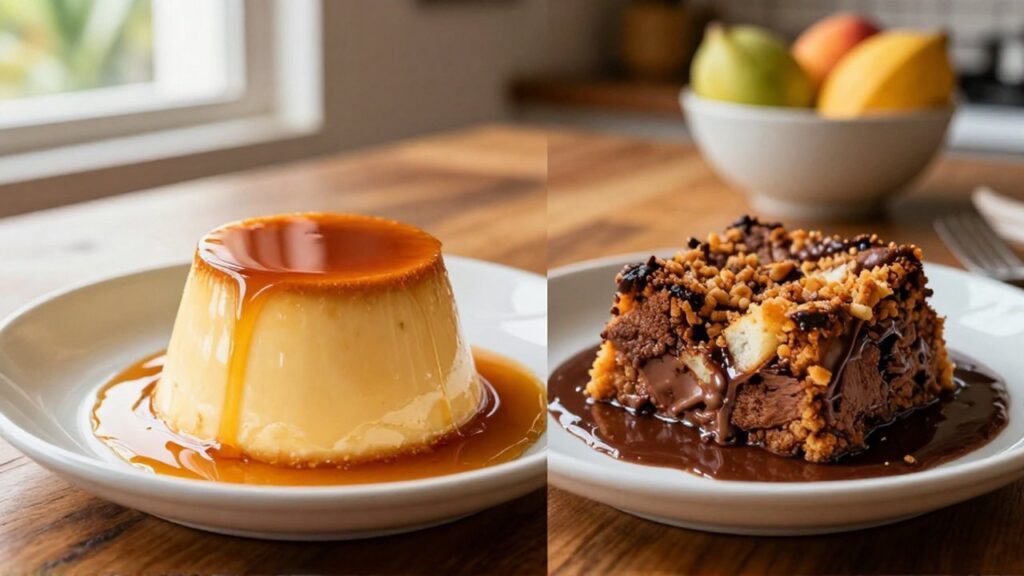
The most significant distinction between flan and pudding lies in their physical structure and how they achieve their "set." Flan is technically a custard. It relies on the coagulation of proteins found in eggs to create a smooth, delicate, and somewhat wobbly structure. Because it is baked—often in a water bath—the result is a creamy yet firm texture that can be easily flipped onto a plate, usually revealing a liquid caramel sauce underneath.
Pudding, on the other hand, is primarily stabilized by starches. While some pudding recipes may incorporate eggs, the thickening agent is typically cornstarch, flour, or tapioca. This results in a much denser, heavier, and more viscous consistency. Unlike flan, which holds its shape through protein structure, pudding is designed to be spoonable and soft, often served in a bowl or glass rather than being unmolded.
Cooking methods and preparation techniques
The way these desserts are cooked creates a fundamental divergence in their culinary identity. Flan requires a controlled, indirect heat method known as a bain-marie (or water bath). This technique prevents the eggs from overcooking and curdling, ensuring the texture remains silky. The presence of sugar in the form of a caramel topping is a hallmark of traditional flan, which is cooked in the same vessel where the caramel resides.
Pudding is generally prepared using stovetop methods. It involves whisking milk, sugar, and a starch over medium heat until the mixture thickens. This process is more about gelatinization—where the starch granules swell and absorb liquid—than it is about the delicate tempering of eggs. While flan is baked in an oven, pudding is typically cooked in a saucepan, making the preparation process faster and more direct.
Comparison of key characteristics

To visualize the differences more clearly, consider the following comparison:
| Feature | Flan | Pudding |
|---|---|---|
| Primary Thickener | Egg proteins | Starches (cornstarch, flour) |
| Dominant Texture | Silky, delicate, and wobbly | Thick, creamy, and heavy |
| Cooking Method | Baking in a water bath | Stovetop simmering |
| Presentation | Often unmolded with caramel | Served in a bowl or cup |
| Stability | Holds shape when sliced | Spreads when scooped |
Why the distinction matters for flavor and dining
Choosing between flan and pudding often comes down to the desired sensory experience. Flan is frequently viewed as a sophisticated, elegant dessert. Its lightness and the contrast between the cool custard and the bitter-sweet caramel make it a popular choice for formal dinners or as a refreshing conclusion to a heavy tropical meal.
Pudding is often categorized as "comfort food." Because of its density and warmth, it is frequently served as a snack or a cozy treat. It is highly versatile in terms of flavor, as the starch base easily absorbs extracts like vanilla, chocolate, or even local fruit purees. While flan is a structured centerpiece, pudding is a versatile, adaptable delight.
Frequently asked questions
Can a pudding be turned into a flan? Not easily. Because flan requires the specific protein coagulation of eggs to set without starch, a starch-based pudding will not have the necessary structure to be unmolded or to hold the weight of a caramel sauce without collapsing.
Is flan a type of pudding? In many culinary definitions, flan is categorized as a custard rather than a pudding. While they share similarities, the reliance on eggs for structure distinguishes flan from the starch-heavy definition of traditional pudding.
Does flan always have caramel? In most traditional recipes, specifically those inspired by Latin American or Spanish traditions, flan is accompanied by a caramel sauce. However, the defining characteristic is the egg-based custard itself, not necessarily the topping.
Which one is easier to make at home? Pudding is generally considered easier for beginners because it is cooked on the stovetop and is more forgiving. Flan requires precise temperature control and a water bath to prevent the eggs from becoming rubbery or grainy.
Leave a Reply