
Different types of coconuts used in the Caribbean

Introduction
The coconut is more than just a tropical fruit in the Caribbean; it is a fundamental pillar of the region's culinary identity, economy, and daily life. From the refreshing juices served on sun-drenched beaches to the rich, creamy milks used in traditional stews, the coconut provides a versatile range of textures and flavors. Understanding the different varieties is essential for anyone looking to master Caribbean cooking or simply enjoy the fruit in its most delicious form.
Not all coconuts are created equal, and using the wrong type for a specific recipe can change the entire outcome of a dish. While some varieties are prized for their hydrating liquid, others are selected for their thick, oily meat or their ability to serve as a base for dairy substitutes. Recognizing these distinctions allows for better culinary results and a deeper appreciation of how this "tree of life" serves various gastronomic purposes throughout the islands.
Differences between green and mature coconuts

In the Caribbean, the distinction between a green coconut and a mature coconut is the most important factor for consumers and cooks. These are not necessarily different species, but rather different stages in the life cycle of the fruit.
Green Coconuts (Young Coconuts) Green coconuts are harvested early in their development. They are characterized by a soft, green outer husk that is relatively easy to puncture. The primary value of the green coconut lies in its water, known locally as agua de coco. This water is clear, sweet, and highly hydrating. Inside, the meat (endosperm) is extremely thin, jelly-like, and soft. It is best consumed fresh as a beverage or used in light desserts where a subtle coconut essence is desired.
Mature Coconuts (Brown Coconuts) As the coconut matures, the outer husk dries out and turns brown and fibrous. The water content decreases and becomes more concentrated and slightly more acidic, while the meat inside thickens significantly. This stage is where the coconut becomes a culinary powerhouse. The meat is firm, white, and high in fat, making it ideal for extracting coconut milk and coconut cream. In Caribbean kitchens, mature coconuts are the standard for cooking savory dishes, making traditional rice, and producing oils.
Common varieties found in Caribbean markets
While many people see only one type of coconut in grocery stores, Caribbean markets often feature specific varieties that cater to different culinary needs.
| Variety | Characteristics | Primary Culinary Use |
|---|---|---|
| King Coconut | Bright orange skin, very sweet water. | Drinking fresh as a premium beverage. |
| Coco de Agua | Large, green, high water volume. | Hydration and light infusions. |
| Mature Brown Coconut | Hard shell, thick white meat. | Coconut milk, oil, and cooking. |
| Mamey/Oil Coconuts | High fat content, very dense meat. | Traditional oil extraction and heavy creams. |
Selecting the right coconut for your cooking
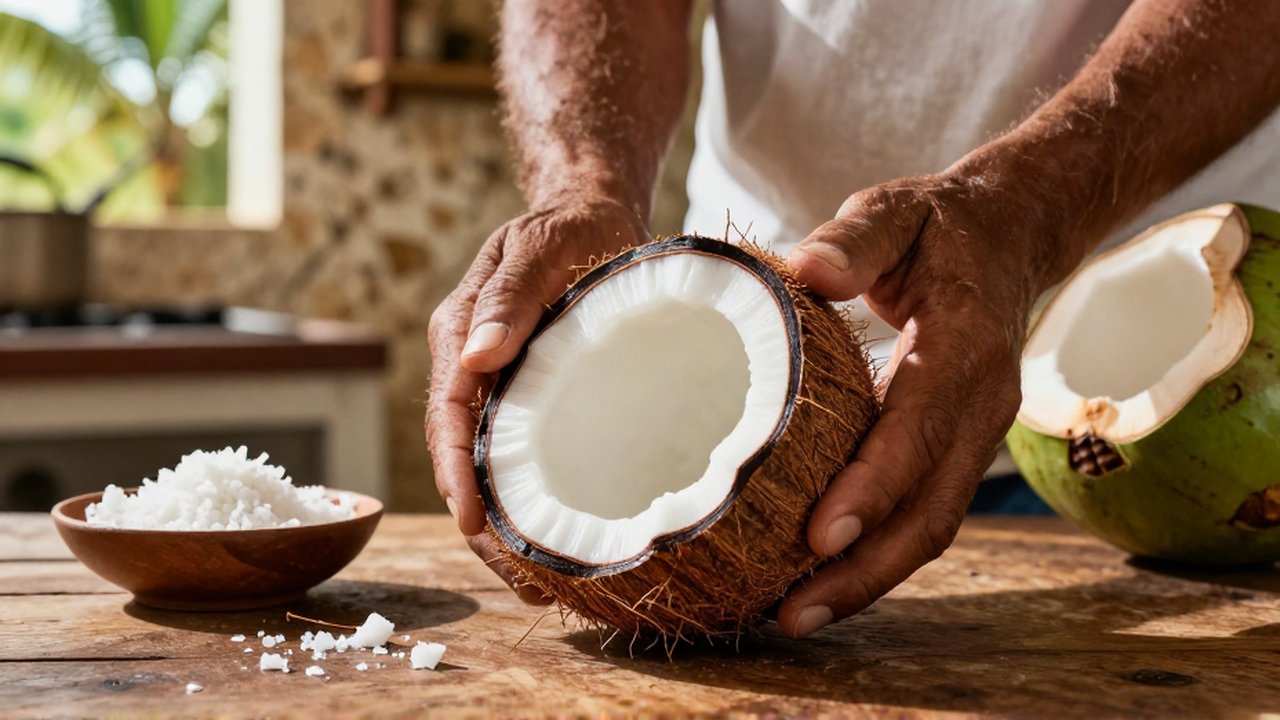
Choosing the correct coconut requires looking at both the exterior and the weight of the fruit. If you are looking for a refreshing drink, prioritize the green varieties. These are often found sold whole with a straw inserted through the husk.
When shopping for cooking purposes, specifically for making coconut milk, look for mature coconuts that feel heavy for their size. A heavy coconut usually indicates that the meat is thick and the moisture content is sufficient for processing. If the coconut feels suspiciously light, the meat may be too thin or the fruit may be dehydrated, which will result in a poor yield when attempting to grate it or squeeze it for milk.
For those making traditional Caribbean sweets or using shredded coconut in baking, the firmness of the meat is key. A well-matured coconut will provide a satisfying crunch and a rich, nutty flavor that defines many regional desserts.
Frequent questions about Caribbean coconuts
Can I use coconut water from a mature coconut for drinking? While you can drink it, the water in mature coconuts is often less sweet and more fermented in taste than the water in green coconuts. It is better suited for cooking or blending into smoothies rather than drinking plain.
What is the best way to extract coconut milk at home? The most traditional method involves grating the white meat of a mature coconut and then squeezing the shavings through a fine cloth or strainer with a small amount of warm water. This produces a much richer milk than store-bought versions.
Is there a difference between coconut milk and coconut cream? Yes. Coconut milk is the liquid obtained after the first press of the grated meat, while coconut cream is the thicker, higher-fat substance obtained from a second pressing or by reducing the milk.
How can I tell if a mature coconut is spoiled? A fresh mature coconut should have a strong, clean coconut scent. If you notice a sour, fermented, or "off" smell when opening the shell, the fats have likely gone rancid and it should not be consumed.
Leave a Reply