
How are Dominican fruit sodas commercially produced

Introduction
Dominican fruit sodas are a beloved staple of Caribbean refreshment, bridging the gap between traditional fruit juices and carbonated soft drinks. These beverages capture the vibrant essence of tropical flavors like passion fruit, tamarind, and guava, presenting them in a fizzy, shelf-stable format. Understanding their commercial production is essential for appreciating how local flavors are scaled from artisanal kitchen concepts into mass-market products that can reach both domestic supermarkets and international markets.
The commercial manufacturing process ensures that these drinks maintain a consistent taste profile while meeting strict food safety standards. Unlike homemade versions, which vary significantly in sweetness and carbonation, commercial production relies on standardized recipes and industrial machinery. This transition from fruit to bottle involves several complex stages, including fruit processing, syrup formulation, carbonation, and packaging, all designed to preserve the tropical identity of the Dominican Republic.
Selection and processing of tropical fruits

The foundation of any high-quality fruit soda is the quality of the raw fruit. Commercial producers typically source seasonal fruits from local Dominican plantations to ensure freshness and support the local economy. Common fruits used include passion fruit (chinola), tamarind, guava, and pineapple. Because fruit quality can fluctuate due to weather and harvest cycles, producers must implement rigorous selection criteria.
Once the fruit arrives at the processing facility, it undergoes cleaning and preparation. This stage involves washing the fruit to remove impurities and peeling or deseeding as required. For many Dominican sodas, the fruit is processed into a concentrated puree or a juice base. This concentration is vital because it allows manufacturers to control the intensity of the flavor and reduces the volume of material that needs to be transported and stored, making the supply chain more efficient.
Formulation of the flavored syrup
After the fruit has been processed, the next critical step is the creation of the flavoring syrup. This is the "heart" of the soda, determining the final taste, color, and sweetness. In a commercial setting, the fruit puree is blended with several key components:
- Sweeteners: Large quantities of sugar or liquid sweeteners are added to balance the natural acidity of tropical fruits.
- Water: Purified water serves as the primary solvent to dilute the concentrates to the correct strength.
- Acidulants: Citric acid or other organic acids are often added to enhance the tartness and act as a natural preservative.
- Stabilizers and Colorants: While some producers prefer natural colors from the fruit itself, others may use food-grade stabilizers to prevent the fruit particles from settling at the bottom of the bottle.
This syrup is carefully tested in laboratory settings to ensure that every batch meets a specific "Brix" level (a measurement of sugar content) and pH level, ensuring that the consumer experiences the same flavor in every bottle.
Carbonation and blending processes
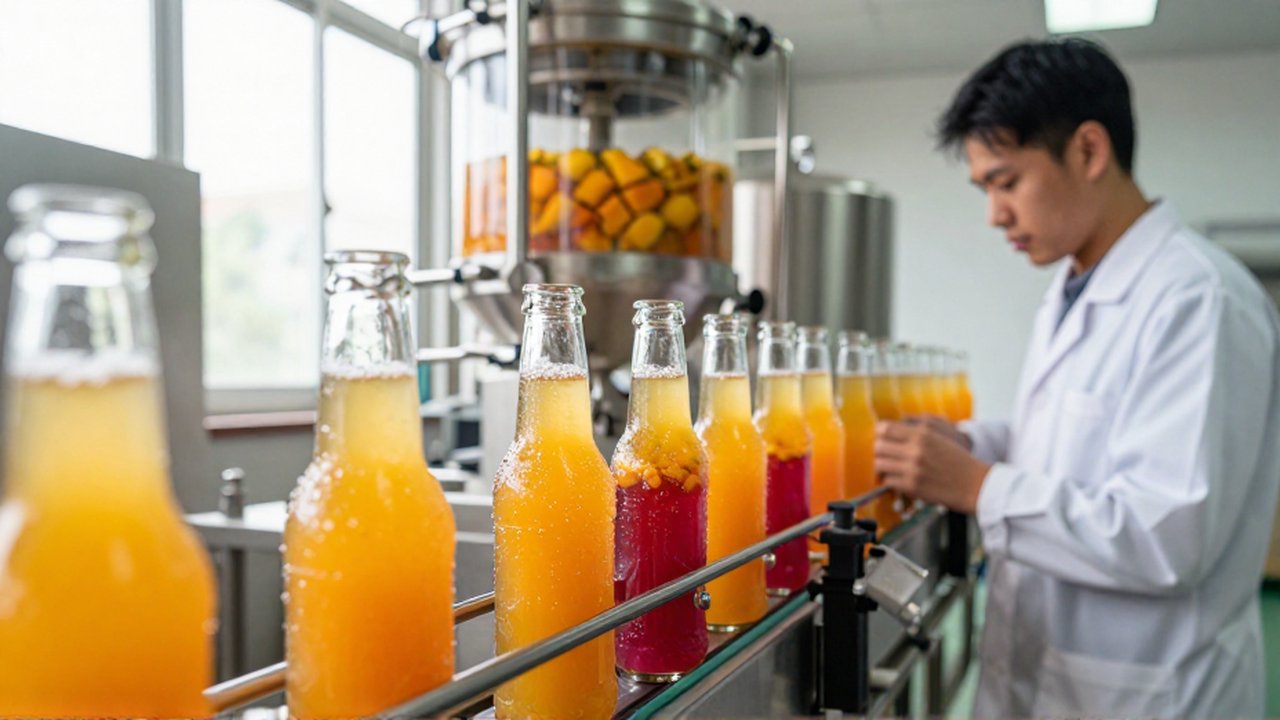
Once the flavored syrup is perfected, it must be combined with carbonated water. This is a precision-heavy stage of the production line. The syrup and the water are mixed in large stainless steel tanks using high-speed agitators to create a homogenous liquid.
The carbonation process involves injecting carbon dioxide (CO2) into the liquid under high pressure. The level of carbonation—the "fizz"—is a key characteristic of the soda. For fruit-based sodas, the carbonation must be strong enough to provide a refreshing sensation but not so intense that it masks the delicate aromatic notes of the tropical fruit. The temperature of the liquid is kept strictly controlled during this stage, as colder liquids absorb CO2 more efficiently than warmer ones.
Bottling and quality control measures
The final stage of commercial production is the automated bottling line. To prevent contamination and ensure speed, the process is almost entirely mechanical. The sequence typically follows this order:
- Rinsing: Empty bottles (glass or PET plastic) are thoroughly rinsed with purified water or air to remove any dust.
- Filling: The carbonated fruit soda is dispensed into the bottles under pressure to prevent the loss of gas.
- Capping/Sealing: Bottles are immediately sealed with caps or crowns to maintain carbonation and prevent spoilage.
- Labeling and Coding: Labels are applied, and batches are stamped with expiration dates and production codes.
Quality control is integrated throughout this entire line. Samples are pulled at regular intervals to check for correct fill levels, seal integrity, and flavor consistency. This rigorous oversight ensures that the product is safe for consumption and that the nutritional and sensory properties remain stable throughout its shelf life.
Frequently Asked Questions
Why do some fruit sodas have pulp while others are clear? This depends on the filtration method used during the fruit processing stage. Sodas intended to feel more "natural" undergo minimal filtration to retain fruit solids, whereas clearer sodas are highly filtered to achieve a smooth, consistent texture.
How is the shelf life of these sodas maintained without losing flavor? Commercial producers use a combination of pasteurization (heating the liquid to kill microorganisms), controlled acidity (pH levels), and airtight packaging to ensure the soda remains fresh for several months.
Is the flavor in commercial soda real fruit? Most high-quality Dominican sodas use a combination of real fruit concentrates and standardized flavoring agents to ensure that the taste remains consistent regardless of the specific fruit harvest season.
Leave a Reply