
Ingredients for making Dominican habichuelas con dulce

Introduction
Habichuelas con dulce, literally translated as "beans with sweets," is one of the most iconic and beloved traditional desserts in the Dominican Republic. Unlike the savory bean dishes found in many other Caribbean and Latin American cultures, this version is a creamy, spiced, and indulgent treat. It is traditionally prepared and enjoyed during Lent, Holy Week, and various religious festivities, serving as a centerpiece of cultural identity and communal celebration.
Understanding the specific ingredients required for this dish is essential because the recipe relies on a complex balance of textures and aromatic spices. The dish is characterized by its velvety consistency, achieved through the combination of legumes, coconut milk, and starches. To master this recipe, one must gather specialized items that provide the signature tropical aroma and rich, sweet flavor profile that distinguishes it from any other bean-based dessert.
Essential base ingredients
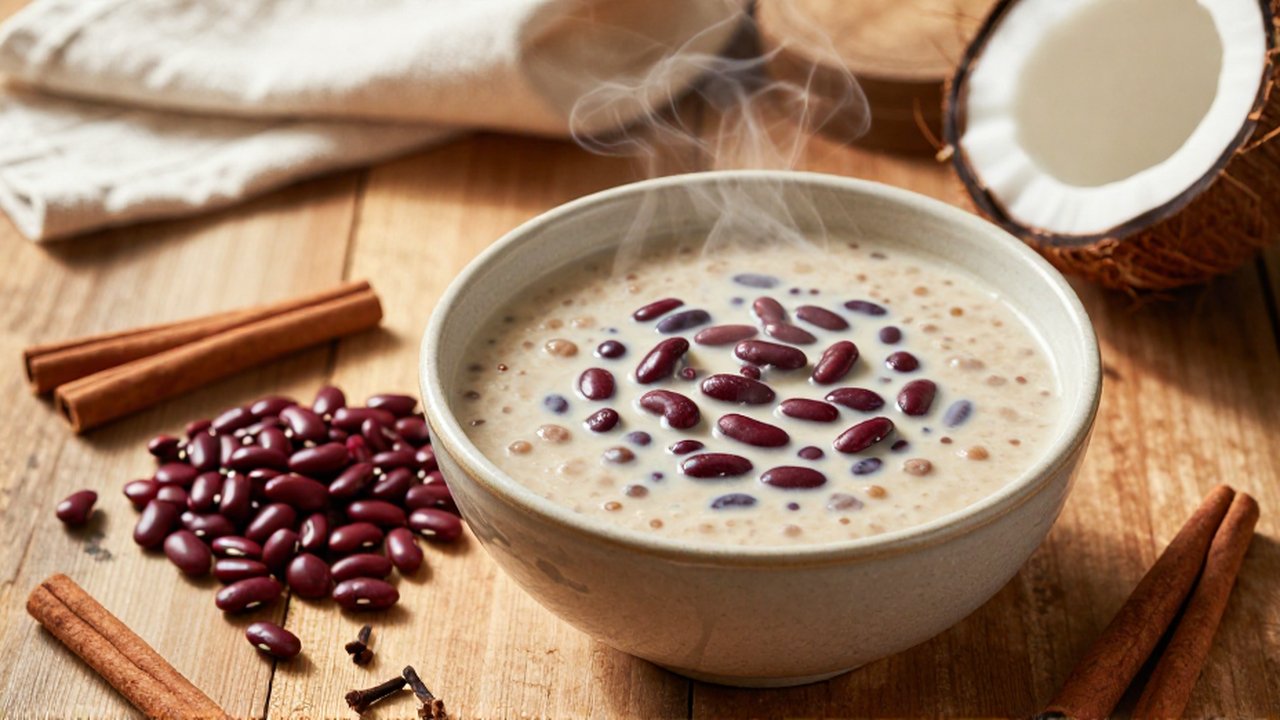
The foundation of habichuelas con dulce rests on a few core components that provide the bulk and the primary flavor profile. Without these specific elements, the dish would lose its characteristic identity.
Red kidney beans are the primary protein and structural base of the dish. While they are technically legumes, in this context, they act as the creamy medium. The beans must be cooked until they are extremely soft, allowing them to be partially mashed or blended to create a thick, smooth texture.
Coconut milk is the indispensable liquid component. It provides the fat and the creamy mouthfeel that defines the dessert. Using fresh coconut milk is highly recommended for the most authentic flavor, though high-quality canned varieties are common substitutes. The coconut milk interacts with the starches to create a luscious, heavy consistency.
Milk (either whole milk or evaporated milk) is often added to thin the mixture slightly and enhance the richness. It helps balance the density of the beans and the coconut milk, ensuring the dessert is silky rather than paste-like.
Spices and aromatic sweeteners
What transforms a simple bean mash into a sophisticated dessert are the spices. The aromatic profile of habichuelas con dulce is deeply traditional and relies on warming, sweet scents.
- Cinnamon: Usually added in stick form during the simmering process to infuse the liquid deeply with warmth.
- Cloves and Allspice: These spices add a complex, earthy undertone that complements the coconut.
- Nutmeg: A small amount of grated nutmeg provides a bright, aromatic finish.
To sweeten the dish, sugar is the primary agent. Depending on local preference, white sugar or cane sugar is used to achieve the desired level of sweetness. The amount of sugar is often adjusted to taste, as the dish is meant to be a dessert rather than a balanced meal.
Texture and traditional add-ins

The complexity of habichuelas con dulce is elevated by the inclusion of various textures. These "add-ins" are what make every spoonful a different sensory experience.
Starch (Cornstarch or Cassava starch): To reach the desired thickness, a thickening agent is often necessary. Cornstarch dissolved in a little cold milk is a common method used to bind the ingredients into a pudding-like consistency.
Grated coconut: For added texture, pieces of fresh coconut meat are often folded into the mixture, providing a slight chewiness that contrasts with the smooth beans.
Spiced raisins: Dried raisins are a staple addition. They soak up the coconut milk and spices, becoming plump jewels of flavor within the dish.
Bread or crushed crackers: In some regional variations, pieces of toasted bread or crushed crackers are added to help thicken the mixture and provide a subtle structural element.
Summary of key components
| Category | Primary Ingredients | Role in the Dish |
|---|---|---|
| Base | Red kidney beans, Coconut milk | Provides structure, creaminess, and body |
| Aromatics | Cinnamon, Cloves, Nutmeg | Creates the signature scent and warmth |
| Sweeteners | Sugar, Evaporated milk | Provides the dessert-like flavor profile |
| Texture | Raisins, Coconut meat, Cornstarch | Adds complexity and controls thickness |
Common questions about the ingredients
Can I use black beans instead of red kidney beans? While red kidney beans are the traditional choice for their color and texture, some variations use different beans. However, the specific creamy consistency and color of the authentic Dominican version are best achieved with red kidney beans.
Is it possible to make this version vegan? Yes, you can substitute the dairy milk with additional coconut milk or plant-based milks. The flavor will remain very similar because the coconut milk is the dominant creamy component.
Why do the beans need to be cooked so thoroughly? The beans must be very soft so they can be partially blended or mashed. This is crucial to achieving the "sweet cream" texture; if the beans remain whole and firm, the dish will feel like a savory stew rather than a dessert.
Can I use dried spices instead of whole spices? While whole cinnamon sticks and cloves provide the best infusion, you can use ground spices in a pinch. However, be careful with the quantity, as ground spices can sometimes make the texture slightly gritty compared to the smooth infusion provided by whole spices.
Leave a Reply