
How to peel and seed a tropical papaya
Introduction
The papaya is a cornerstone of tropical fruit consumption, prized for its buttery texture and subtle, musky sweetness. Whether enjoyed fresh in a fruit salad, blended into a creamy smoothie, or used as a base for tropical salsas, mastering the preparation of this fruit is an essential skill for anyone looking to enjoy its full flavor profile. Proper handling ensures that you maximize the edible flesh while minimizing waste and mess.
Learning how to peel and seed a papaya correctly is important because the fruit has a unique structure consisting of a thick skin and a central cavity filled with small, gelatinous seeds. If not handled with care, the sticky juices can coat your hands, and the seeds can easily scatter, making a cleanup difficult. Knowing the right technique allows you to prepare this nutritious fruit quickly and efficiently for any meal.
Prepare the fruit and tools
Before you begin, ensure you have a stable cutting board and a sharp chef's knife. A sharp blade is critical; a dull knife requires more pressure, which increases the risk of slipping on the smooth, waxy skin of the papaya. It is also helpful to have a spoon—a large tablespoon works best—and a paper towel nearby to manage any juices that may escape during the process.
Start by washing the exterior of the papaya under cool running water. Even though you will be removing the skin, washing the fruit prevents any dirt or bacteria on the surface from being transferred to the flesh by your knife as you slice through it. Once cleaned, pat the fruit dry to ensure it does not slide around on the cutting board while you are working.
Slice the papaya into halves
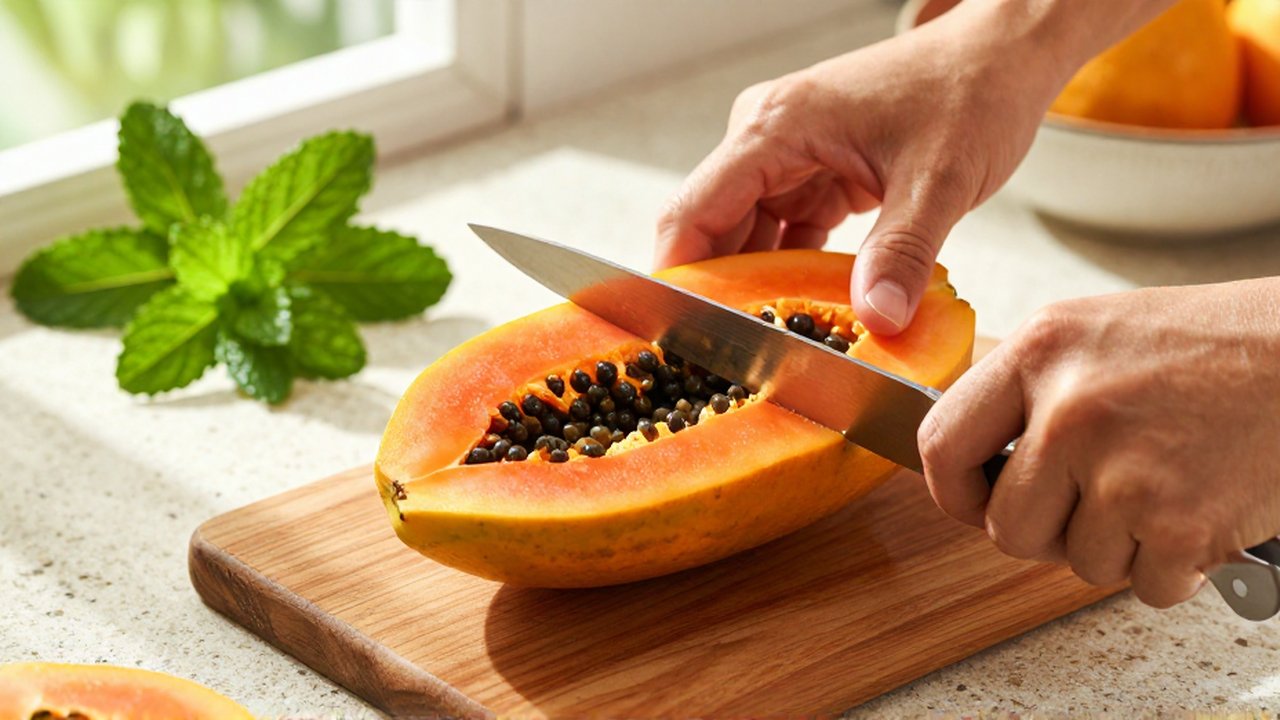
The first step in the preparation process is to divide the fruit to access the center. Place the papaya horizontally on the cutting board. Grip the fruit firmly and, using your chef's knife, slice the papaya in half lengthwise, cutting from the stem end down to the blossom end.
Depending on the size of the fruit, you may find it easier to work with two halves. If you are dealing with an exceptionally large papaya, you may choose to slice it into quarters to make the subsequent seeding and peeling steps more manageable. Ensure your cuts are clean and straight to maintain the integrity of the fruit's shape.
Remove the seeds from the center
Once the papaya is halved, you will see a central cavity filled with small, round, black seeds. These seeds are encased in a slippery, translucent membrane. While some culinary traditions use them for their peppery flavor, most people prefer to remove them to enjoy the smooth texture of the pulp.
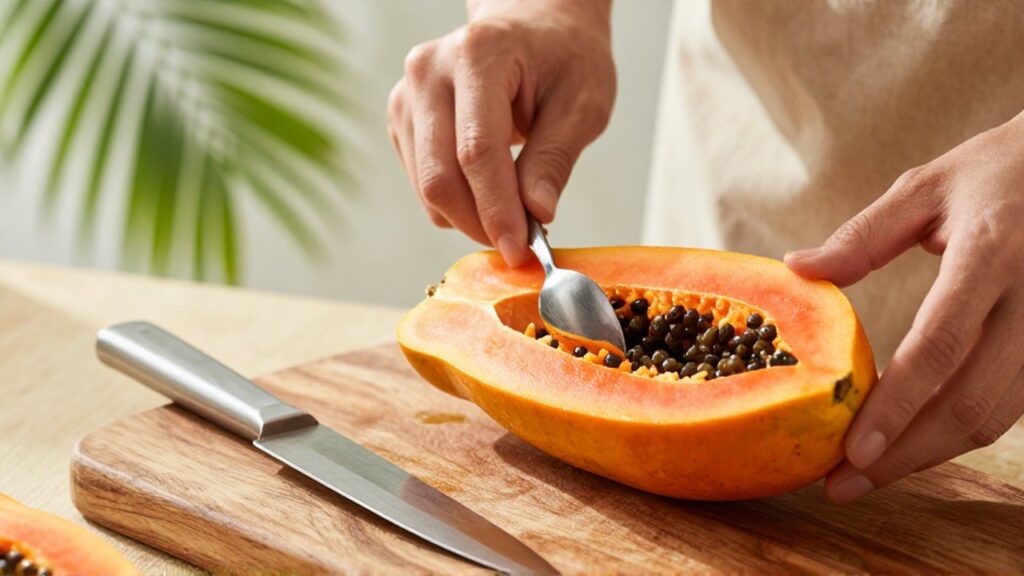
To remove the seeds, hold one half of the papaya face up. Insert a large spoon into the center of the cavity. Using a gentle scraping motion, work the edge of the spoon along the inside walls of the fruit, pushing the seeds and the excess mucilage toward the center. Lift the spoon away, and the seeds should be collected within it. Rinse the spoon and repeat the process with the second half.
Peel the skin from the flesh
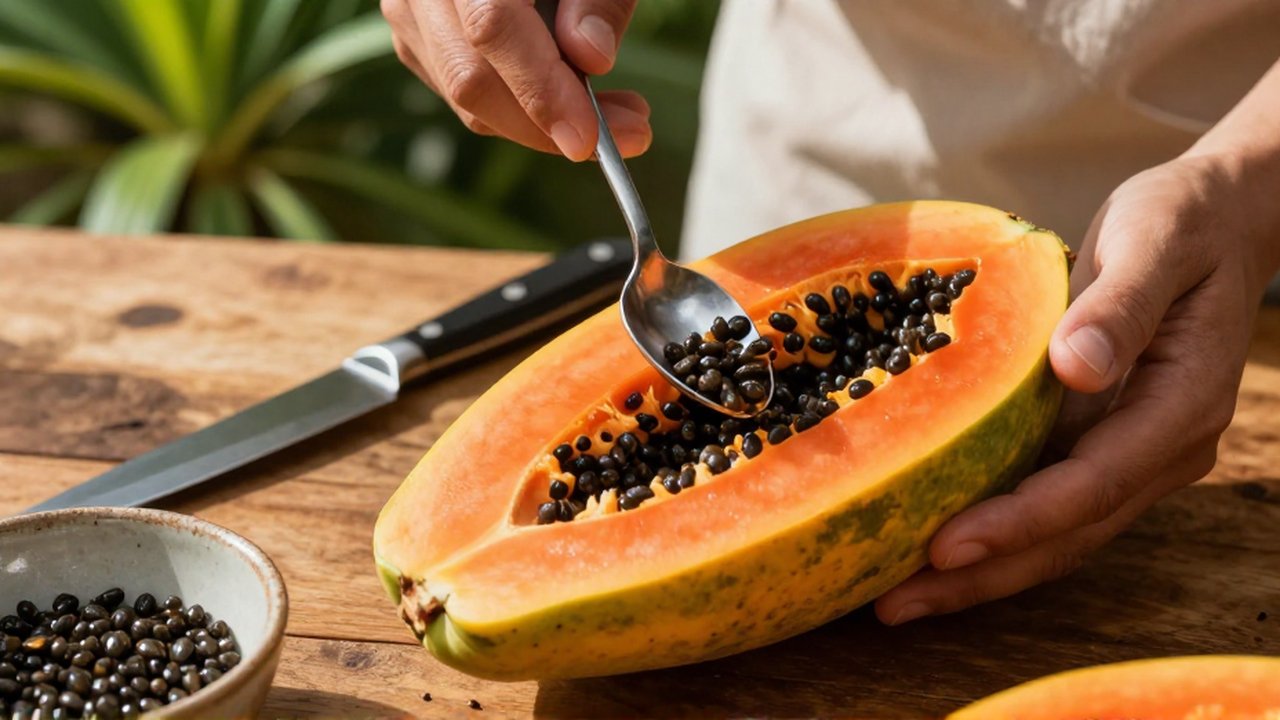
There are two primary ways to peel a papaya: removing the skin before slicing or removing it from the halves. For most home cooks, removing the skin from the halves is the most controlled and easiest method.
- The Spoon Method: Place a papaya half face down on the cutting board (skin side up). Use the edge of a spoon to carefully slide between the skin and the flesh. Gently follow the contour of the fruit, separating the skin from the pulp. This method is excellent for preserving the shape of the fruit.
- The Knife Method: Place the papaya half face down. Using a small paring knife or the tip of your chef's knife, carefully slice away the skin in strips or a single layer. Be cautious not to cut too deeply into the flesh, as this will result in wasted fruit.
Serving and storage suggestions
Once the papaya is peeled and seeded, you can slice the flesh into cubes, wedges, or thin slices. For an authentic tropical experience, serve the slices chilled. The sweetness is often enhanced by a light squeeze of lime juice, which provides a bright acidity that balances the fruit's natural richness.
If you have leftover papaya, store the peeled and cut pieces in an airtight container in the refrigerator. Consuming the fruit within one to two days is ideal for maintaining the best texture and flavor. Avoid freezing the fruit if you intend to eat it fresh, as the texture will become mushy upon thawing.
Frequently asked questions
Can you eat the papaya seeds? Yes, papaya seeds are edible and have a distinct, slightly peppery or mustard-like flavor. They can be dried and ground to use as a spice or added directly to salads for a nutritional boost.
How do I know if a papaya is ripe enough to peel? A ripe papaya will yield slightly to gentle pressure when held in your hand, similar to a ripe avocado. The skin should also show a transition from green to yellow or orange, depending on the variety.
Why is the papaya flesh so soft? The soft texture is a natural characteristic of the fruit's ripeness. As the papaya matures, its enzymes break down the cellular structure, creating that signature buttery consistency.
Can I use a vegetable peeler on a papaya? While a vegetable peeler can work on smaller, firmer papayas, it is often difficult to use on larger or very ripe varieties because the skin is thick and the fruit is delicate. The spoon or knife method is generally more reliable.
Leave a Reply