Temperature guide for simmering Dominican beans

Introduction
In Dominican cuisine, the perfect pot of beans—whether they are red kidney beans, black beans, or pigeon peas—is a fundamental cornerstone of every meal. Achieving the ideal texture, where the beans are creamy on the inside and the liquid has thickened into a rich, flavorful sauce, depends almost entirely on the mastery of the simmering process. Simmering is a gentle cooking method that uses lower temperatures than boiling to ensure even heat distribution throughout the legume.
Understanding the precise temperature control required for simmering is essential for any cook looking to replicate authentic Caribbean flavors. If the heat is too high, the beans may burst or the liquid may evaporate too quickly before the legumes are tender. If the heat is too low, the cooking time becomes excessive, potentially leading to a mushy consistency or uneven cooking. This guide provides the technical parameters necessary to maintain steady, controlled heat for the best results.
Understanding the difference between boiling and simmering
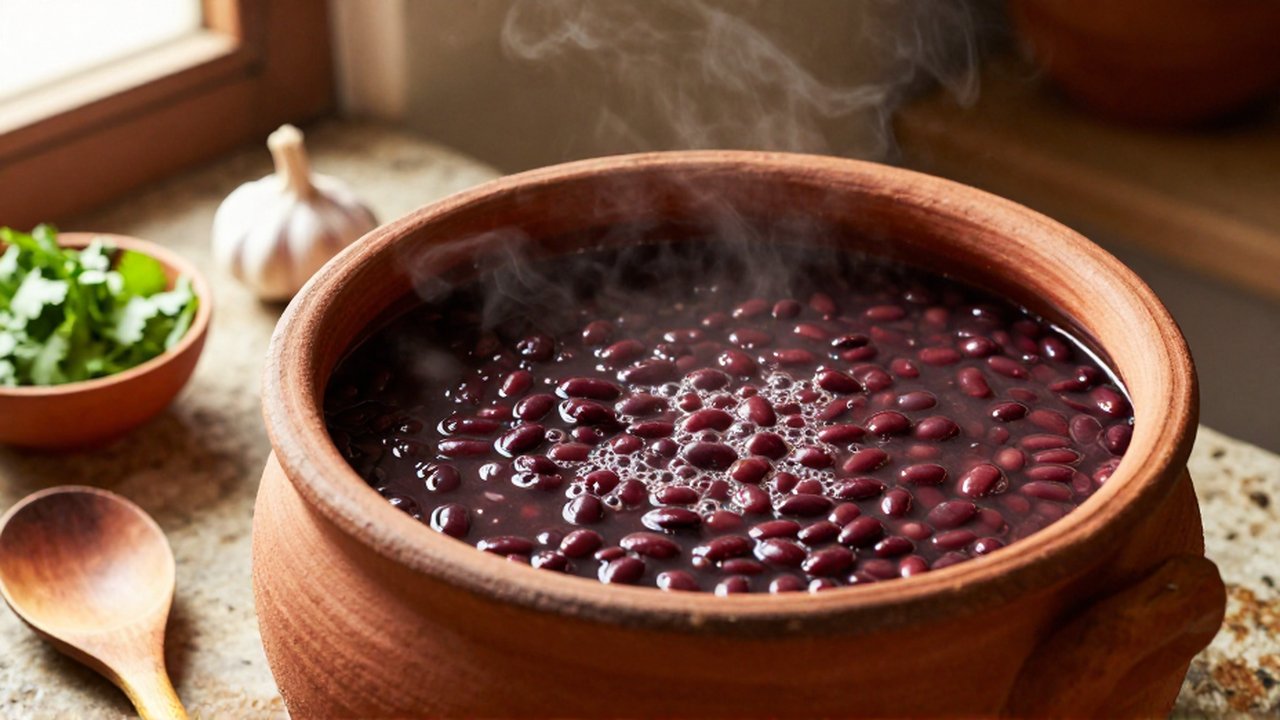
To master Dominican beans, one must first distinguish between a rolling boil and a gentle simmer. A boil occurs when large bubbles rise rapidly and break the surface of the liquid continuously. While boiling is necessary at the beginning of the cooking process to bring the pot up to temperature, maintaining this heat is a mistake. Excessive agitation from boiling can break the delicate skins of the beans, resulting in a grainy or disintegrated texture.
Simmering, by contrast, is characterized by small, occasional bubbles that rise slowly to the surface. In a simmering state, the temperature of the liquid remains just below the boiling point. This gentle movement allows the heat to penetrate the center of each bean slowly, ensuring that the starch breaks down uniformly. This controlled environment is what creates the characteristic "caldo" (broth) that is thick, velvety, and deeply infused with the aromatics like garlic, onion, and bell pepper used in the Dominican kitchen.
Ideal temperature ranges for bean cooking
The success of your beans depends on maintaining a specific thermal window. While home stoves vary, the goal is to reach a state where the liquid is consistently hot but not turbulent.
| Cooking Stage | Heat Level | Visual Indicator | Purpose |
|---|---|---|---|
| Initial Phase | High | Rapid, large bubbles | To bring the water and beans to temperature quickly. |
| Simmering Phase | Low to Medium-Low | Small, sporadic bubbles | To tenderize the beans and thicken the sauce. |
| Reduction Phase | Very Low | Constant steam, minimal movement | To achieve the final desired consistency of the broth. |
For most standard stovetops, once you have reached a boil, you should immediately reduce the flame to the lowest setting that keeps the liquid at a very slight, steady simmer. If you see large bubbles, the temperature is too high; if you see no movement at all, the temperature is too low and may cause the beans to cook unevenly.
Steps to maintain consistent temperature

Achieving a perfect simmer requires more than just turning a knob. It involves monitoring the interaction between the liquid, the beans, and the pot.
First, always start with a cover on the pot to help retain heat and prevent excessive evaporation. However, as the beans cook, you may need to lift the lid slightly to allow for some moisture loss, which helps thicken the sauce. Monitor the liquid level frequently; if the temperature causes the liquid to drop too much, add more hot water (not cold) to avoid a sudden temperature drop that can shock the beans and prevent themie from softening.
Second, manage the "hot spots" of your cookware. If you are using a thin-bottomed pot, the heat may be uneven, causing certain areas to boil while others remain cool. To counter this, occasionally stir the beans gently with a wooden spoon to redistribute the heat. Finally, if you notice the simmer is becoming too aggressive, turn the heat down a notch and wait a few minutes to see if the stability returns.
Common mistakes in temperature management
One of the most frequent errors is leaving the beans on a high heat for too long in an attempt to save time. This results in beans that are soft on the outside but still hard in the middle. Another mistake is the addition of cold water during the cooking process. Adding cold water drops the temperature instantly, which can cause the skins of the beans to toughen or even peel off prematurely.
Additionally, many cooks fail to account for the different densities of different bean varieties. For instance, dried red beans may require a more stable, longer simmer than canned or pre-soaked beans. Always adjust your heat based on the visual feedback of the liquid rather than strictly following a timer.
Frequently asked questions
How do I know if my simmer is too high? If you see large, aggressive bubbles breaking the surface of the liquid continuously, your heat is too high. This is a boil, not a simmer, and it will likely break your beans apart.
Can I use a slow cooker to maintain simmering temperatures? Yes, a slow cooker is excellent for maintaining a steady, low temperature, which is ideal for simmering beans. However, you must ensure there is enough liquid, as evaporation is much lower in a slow cooker than on a stovetop.
Why are my beans still hard even though I simmered them for a long time? This can happen if the temperature was too low to actually cook the starch, or if the water was too hard (high mineral content). Additionally, if you added acidic ingredients like vinegar or tomato early in the process, it can prevent the beans from softening.
Should I cover the pot during the simmering stage? For most of the simmering process, keeping the lid on is recommended to maintain a consistent temperature and prevent the liquid from evaporating too quickly. You may uncover it at the very end if you need to reduce the sauce further.
Leave a Reply