What are the origins of Dominican religious folk festivals
Introduction
Dominican religious folk festivals are vibrant, colorful celebrations that blend spirituality, community, and ancestral heritage. These festivities serve as a bridge between the sacred and the secular, allowing communities to express their faith through music, dance, and culinary traditions. Understanding their origins is essential for anyone looking to grasp the soul of the Dominican Republic, as these events represent the living history of the nation.
These festivals are particularly significant during patron saint days, Holy Week, and various seasonal cycles. They matter because they are not merely religious observations; they are keepers of cultural memory. They preserve the rhythms, stories, and social structures that have defined the Dominican people for centuries, acting as a unifying force in both rural villages and urban centers.
The confluence of Spanish and African influences
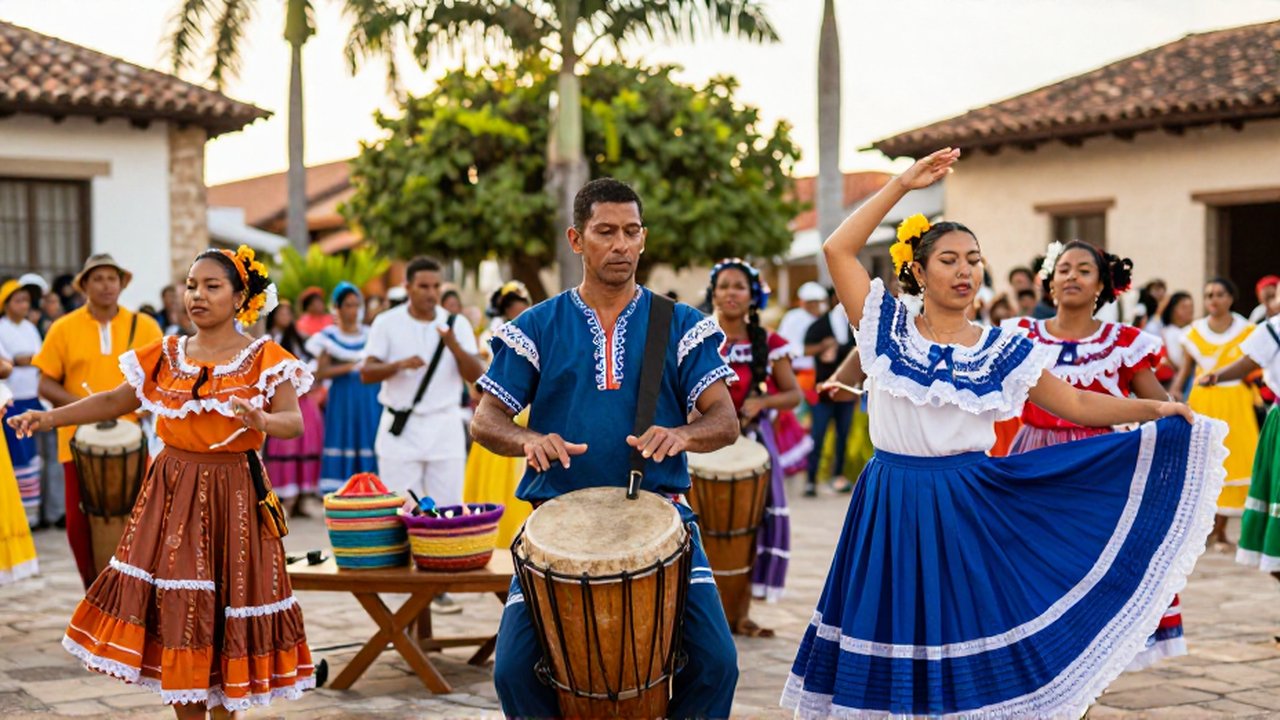
The origins of Dominican religious folk festivals lie in a complex process of cultural syncretism. When Spanish colonizers arrived in the Caribbean, they brought with them the Roman Catholic liturgy, the veneration of saints, and a specific calendar of religious observances. These European traditions established the institutional framework for most festivals seen today.
However, the religious landscape changed profoundly with the arrival of enslaved African populations. These individuals brought their own spiritual cosmologies, rhythmic sensibilities, and communal practices. Because many were forced to adopt Catholicism, they cleverly infused their traditional beliefs into Christian rituals. This fusion resulted in a unique "folk" expression where the drumbeat of the African tradition met the iconography of the Catholic Church. In many festivals, the devotion to a specific saint is accompanied by dances and musical styles that carry a distinctly African heartbeat, creating a spiritual expression that is uniquely Dominican.
The role of the patron saint celebrations
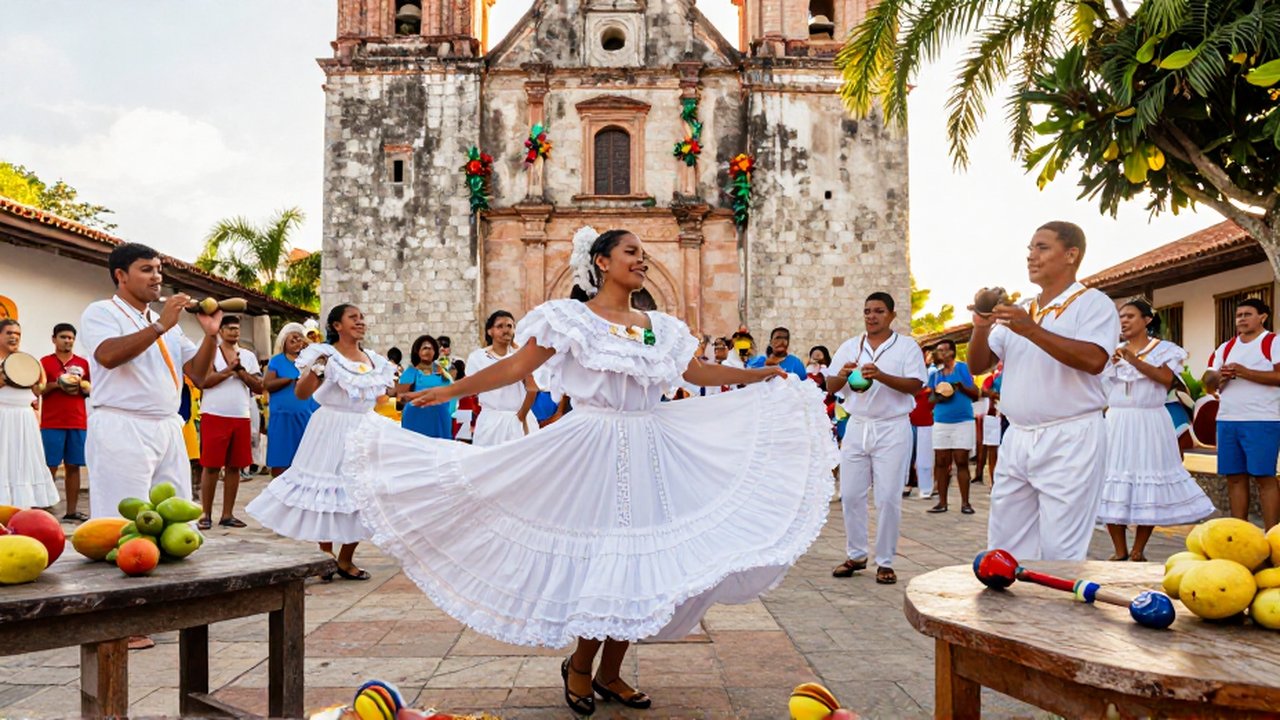
A central pillar of Dominican folk festivals is the celebration of patron saints. Every town, village, and parish traditionally has a patron saint who acts as a spiritual protector for that specific community. The origins of these celebrations are rooted in the colonial practice of organizing social and administrative life around the local church and its designated protector.
These festivals typically follow a structured pattern:
- The Novena: A period of nine days of prayer leading up to the feast day.
- The Procession: A public parade where the image of the saint is carried through the streets, often accompanied by traditional music.
- The Community Feast: A time when families gather to share traditional foods, often prepared in large quantities to feed neighbors and visitors.
These celebrations serve a vital social function, reinforcing a sense of belonging and local identity. They are periods when the boundaries between individual households dissolve, replaced by a collective identity centered on the patron saint.
Traditional music and dance in religious contexts
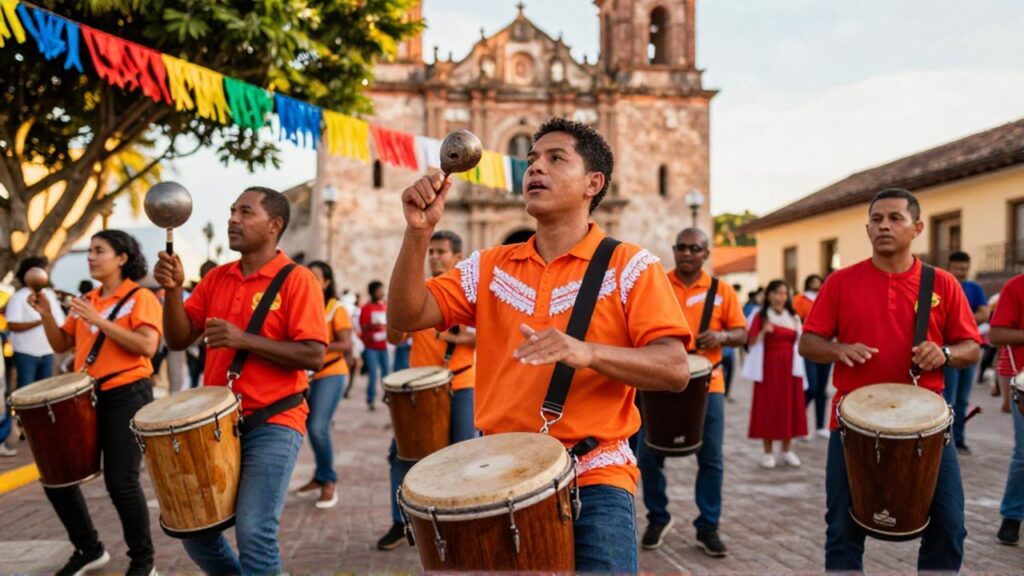
Music and dance are not merely accompaniments to Dominican religious festivals; they are fundamental to the spiritual experience. The origins of these rhythmic expressions are found in the intersection of liturgical music and secular folk rhythms.
In many religious contexts, certain musical styles become inseparable from specific spiritual moments. For instance, the use of percussion in processions or during specific communal dances reflects a deep-seated connection to ancestral rhythms. These elements transform a standard religious service into a folk festival. The rhythm acts as a vehicle for collective emotion, moving the community from solemn prayer to celebratory joy. This movement is a hallmark of Dominican folklore, where the body and the spirit are engaged simultaneously through movement and melody.
Cultural significance and community cohesion
Beyond the theological meanings, the origins of these festivals are deeply tied to the survival of community structures. Historically, festivals provided a rare opportunity for social cohesion in a landscape that was often divided by geography or social class.
| Element | Role in the Festival | Cultural Function |
|---|---|---|
| Processions | Public display of faith | Reinforces territorial identity |
| Traditional Music | Rhythmic accompaniment | Preserves oral and musical history |
| Communal Food | Shared meals | Strengthens social bonds and hospitality |
| Dance | Expressive movement | Connects the physical and spiritual worlds |
These festivals also act as a mechanism for the transmission of tradition. During these events, younger generations observe the rituals, listen to the stories of the elders, and learn the specific culinary and musical skills required to participate, ensuring that the cultural thread remains unbroken.
Frequently asked questions
What is the main difference between a standard mass and a folk festival? A standard mass is a formal liturgical service centered on prayer and sacraments, whereas a folk festival incorporates the mass into a larger community celebration involving music, public processions, and social festivities.
How does food play a role in these celebrations? Food is essential for fostering community. Traditional dishes are prepared to honor the occasion, and the act of sharing these meals serves as a way to welcome outsiders and reinforce kinship ties within the town.
Are these festivals strictly Catholic? While the framework is almost always Roman Catholic, the expression of the faith is folk-based, meaning it includes elements of African-descended traditions and local customs that may not be part of standard European Catholic liturgy.
Why are patron saints so important in Dominican culture? Patron saints represent the identity of a specific locality. The celebration of a patron saint is a way for a community to celebrate its own unique history, lineage, and spiritual protection.
Leave a Reply