
Essential spices for seasoning Dominican chicken dishes

Introduction
Dominican cuisine is defined by its vibrant, aromatic, and deeply layered flavors. When preparing chicken, which serves as a staple protein in the Dominican household, the secret to achieving an authentic taste lies not in complex culinary tools, but in the mastery of seasoning. Proper seasoning transforms simple poultry into a rich, savory centerpiece that carries the soul of the Caribbean.
Understanding the core spices used in Dominican cooking is essential for anyone looking to replicate the traditional flavors of the island. These seasonings are used to marinate, braise, and fry, providing a consistent profile of earthiness and brightness. Whether you are making a classic Pollo Guisado (stewed chicken) or crispy fried chicken, these specific ingredients form the foundation of the flavor profile.
Learning how to balance these spices allows you to move beyond basic cooking and into the realm of authentic Dominican gastronomy. By mastering this specific pantry of aromatics, you can ensure that your chicken dishes possess the depth, color, and aroma that characterize home-cooked meals in the Dominican Republic.
Core spices for authentic Dominican flavor

The foundation of most Dominican chicken dishes is a combination of fresh aromatics and dried spices that work together to penetrate the meat. Unlike some cuisines that rely on heat via chili peppers, Dominican seasoning focuses on savory complexity and herbal undertones.
The most important element is often referred to as the sofrito base, which provides the wet aromatic foundation. While many ingredients are fresh, several dried spices are indispensable for rounding out the profile.
- Oregano: This is perhaps the most critical spice. Dominican oregano is often more robust and earthy than Mediterranean varieties. It provides a woody, pungent aroma that is essential for both stews and fried preparations.
- Garlic: While technically an aromatic, garlic is used in such high quantities that it functions as a primary seasoning. It is typically crushed or minced into a paste to ensure it coats every piece of chicken.
- Black Pepper: Used to provide a subtle, consistent warmth that sits in the background without overpowering the other delicate herbs.
- Cumin: Used sparingly, cumin adds a deep, smoky, and earthy layer that complements the savory notes of the poultry.
The role of acidity and color in seasoning
In Dominican cooking, seasoning is not just about taste; it is also about texture and visual appeal. To achieve the characteristic flavor, an acidic component is almost always introduced during the marinating process.
Citrus juices, particularly lime or bitter orange, serve a dual purpose. First, the acid helps tenderize the chicken fibers, making the meat more succulent. Second, it reacts with the spices to brighten their flavors, preventing the dish from tasting "heavy" or overly salty.
Color is also a key factor. Many cooks use seasonings that contribute to a golden-brown hue. When making Pollo Guisado, the combination of tomato paste, dried oregano, and the natural juices released by the chicken creates a rich, reddish-brown sauce. For fried chicken, the goal is a deep amber crust, achieved through the careful application of salt, pepper, and garlic powder before hitting the hot oil.
Common mistakes in seasoning chicken
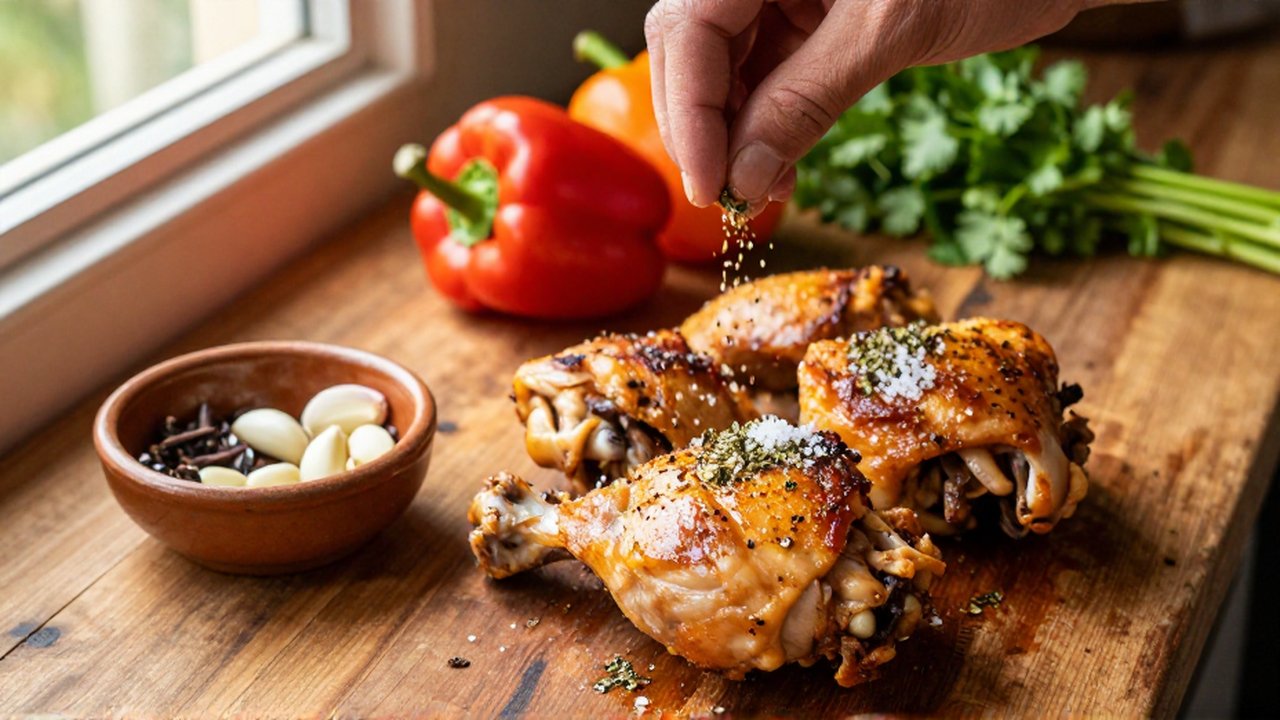
Achieving the perfect Dominican flavor requires more than just tossing spices into a pan. There are several common errors that can diminish the quality of the dish.
One frequent mistake is failing to allow enough time for the seasoning to penetrate the meat. Because chicken can be dense, especially when using bone-in pieces, a quick toss in spices often results in a dish that is flavorful on the outside but bland on the inside. Marinating for at least thirty minutes, or ideally several hours, is crucial.
Another error is the improper use of salt. Because many traditional recipes involve reducing sauces (making them thicker and more concentrated), adding too much salt at the beginning can result in an overly salty final dish. It is better to season moderately during the initial stage and adjust the saltiness toward the end of the cooking process.
Finally, some cooks neglect the "sear." In many Dominican techniques, browning the chicken in the pot before adding liquids is vital. This technique, known as the Maillard reaction, incorporates the spices into a caramelized crust that forms the base of the delicious gravy found in stews.
Frequently asked questions
Can I use dried oregano instead of fresh? Yes, dried oregano is the standard in most Dominican households. It is quite potent, so it is best to use it in moderation to avoid a bitter taste.
What is the best way to apply the seasoning to the chicken? For the best results, create a paste using minced garlic, salt, pepper, oregano, and a little olive oil. Rub this mixture thoroughly under the skin and inside the cavity of the chicken to ensure deep flavor penetration.
Is tomato paste considered a spice? While technically a vegetable product, tomato paste is a fundamental seasoning component in Dominican chicken stews. It provides the necessary color and a subtle sweetness that balances the acidity of the citrus.
How do I prevent the spices from burning? When sautéing your aromatics and spices, ensure the heat is at a medium level. If the spices burn before the chicken is added, they can turn bitter and ruin the entire flavor profile of the dish.
Leave a Reply