How to identify different banana varieties in Dominican Republic

Introduction
In the Dominican Republic, bananas and their close relatives, plantains, are more than just fruit; they are a fundamental staple of the daily diet. Understanding how to distinguish between the various varieties available in local markets is essential for anyone looking to cook authentic Caribbean dishes. Because different types serve distinct culinary purposes—some are meant to be eaten raw and sweet, while others are starchy and intended for frying or boiling—misidentifying them can lead to disappointing culinary results.
Learning to recognize these varieties by their skin texture, shape, size, and starch content allows you to navigate tropical markets with confidence. Whether you are preparing a sweet breakfast or a savory side dish like tostones, knowing exactly which fruit to pick is the first step toward mastering Dominican gastronomy. This guide provides the necessary criteria to identify the most common varieties found throughout the island.
Characteristics of sweet bananas
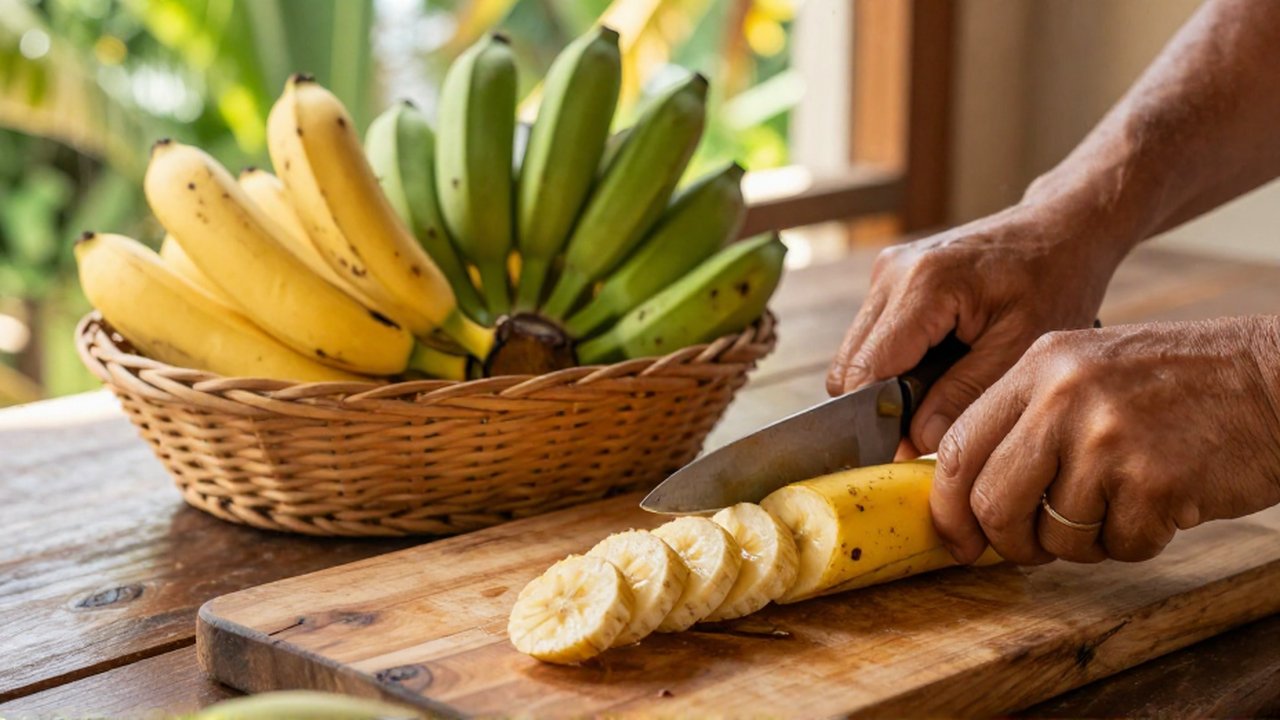
Sweet bananas, often referred to locally as guineos, are the varieties intended for direct consumption. They are characterized by their higher sugar content and softer texture when ripe.
The most common type is the standard yellow banana, which is medium in size with a thin skin. As it ripens, the skin becomes bright yellow and may develop small brown spots, which signal peak sweetness. These are perfect for snacking, fruit salads, or smoothies.
Another variety to look for is the smaller, thinner-skinned banana. These often have a more intense aroma and a creamy consistency. When identifying these in a market, look for a slightly curved shape and a skin that feels delicate. If the fruit is too firm, it is likely underripe and will lack the necessary sweetness for raw consumption.
Identifying cooking plantains
Plantains, known as plátanos in the Dominican Republic, are fundamentally different from sweet bananas. They are starchy, less sweet, and are almost always cooked before being eaten.
To identify a proper cooking plantain, look for a larger, thicker, and more angular shape compared to sweet bananas. The skin is significantly tougher and thicker. Unlike sweet bananas, plantains are often purchased when they are green and firm. This green state indicates a high starch content, which is necessary for making tostones (fried green plantains).
As plantains ripen, they turn yellow and eventually develop black spots. This transition changes the flavor profile from savory to sweet. If you are looking to make maduros (sweet fried plantains), you must select the variety that is heavily spotted or almost entirely black, as this indicates the sugars have developed sufficiently.
Comparison between guineos and plátanos
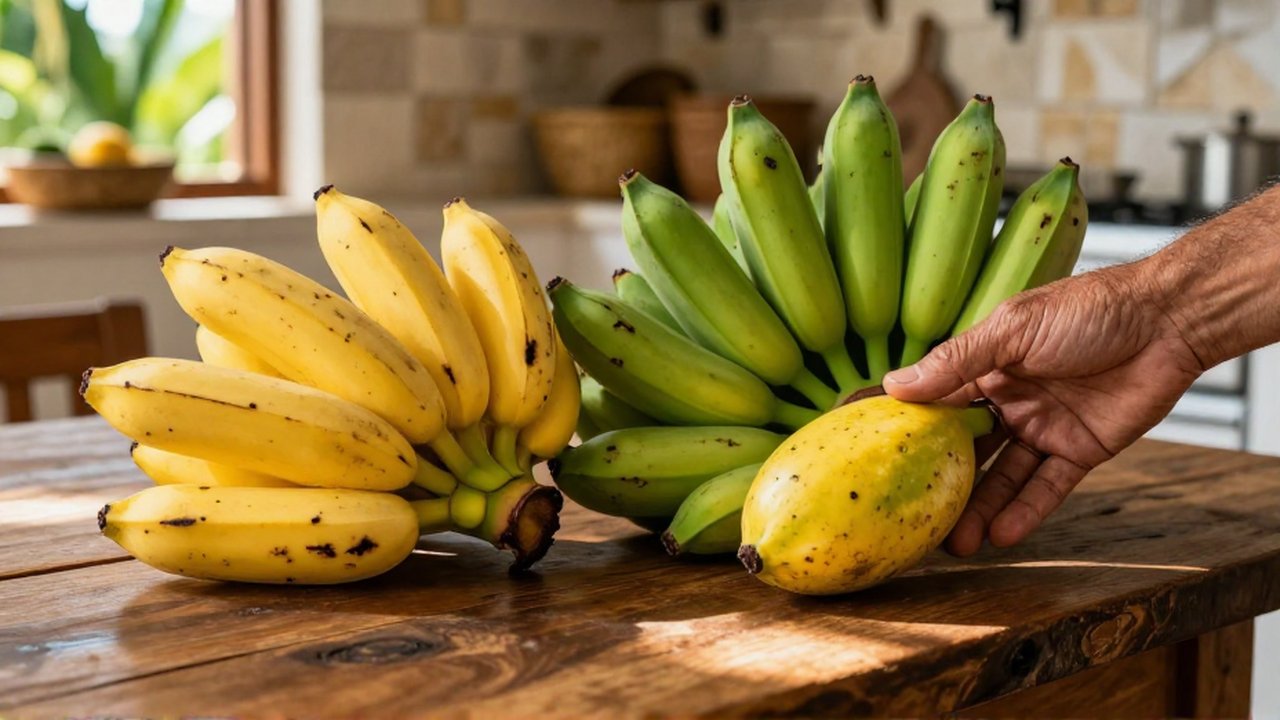
Distinguishing between these two categories is the most important skill for any cook in the Caribbean. The following table summarizes the primary differences used for identification:
| Feature | Guineos (Sweet Bananas) | Plátanos (Plantains) |
|---|---|---|
| Primary Use | Raw consumption, desserts | Frying, boiling, mashing |
| Shape | Generally more curved and slender | Larger, thicker, and more elongated |
| Skin Texture | Thin and easy to peel | Thick and robust |
| Texture | Soft and creamy when ripe | Dense and starchy |
| Color at Maturity | Bright yellow | Yellow to deep black |
Common mistakes when selecting fruit
One of the most frequent mistakes is attempting to use a green plantain for a sweet dish or a ripe sweet banana for a savory fried dish. If you attempt to make tostones with a ripe, yellow plantain, the high sugar content will cause the fruit to burn in the oil and result in a mushy texture rather than a crispy one.
Another error is selecting fruits based solely on size. While size can be a clue, the starch-to-sugar ratio is the true deciding factor. Always check the firmness of the fruit. A green plantain should be very hard to the touch, whereas a sweet banana should have a slight give when pressed gently.
Frequently asked questions
Can I eat a green plantain like a regular banana? No, green plantains are extremely starchy and have very little sweetness. They are difficult to digest when raw and are meant to be cooked through boiling or frying.
What does it mean when a banana has many black spots? In sweet bananas, black spots indicate that the starch has converted into sugar, making the fruit very sweet and soft. In plantains, black spots mean they are ready to be used for sweet fried dishes (maduros).
How can I tell if a plantain is too ripe for tostones? If the skin of the plantain has turned yellow or begun to show black spots, it has lost the firm, starchy texture required for crispy tostones. For frying, always choose the bright green variety.
Leave a Reply